










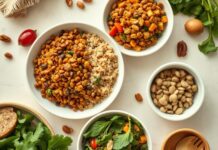










Meal sequencing diabetes research suggests that eating vegetables and protein before carbohydrate-rich foods may reduce the immediate rise in blood glucose after a meal. Small controlled studies have found lower post-meal glucose responses with this order, but they do not show that it prevents diabetes or replaces medication, meal planning, or other care.
What Meal Sequencing Diabetes Studies Actually Show
A 2026 systematic review by Jinmin Kim, Eun-Hee Jang, and Seungmin Lee examined meal-order studies in healthy adults. The researchers searched for studies published from 2015 to March 2025 and included six studies, with 107 participants aged about 20 to 37. Most reported lower short-term glucose responses when vegetables, fruit, or protein-rich foods came before carbohydrate-rich foods, rather than eating carbohydrates first or having the foods together.
That pattern is encouraging, but the review was small: it combined just one randomized controlled trial, four randomized crossover studies, and one repeated-measures study. The participants were healthy adults, not a broad sample of people with diabetes. Differences in study meals and methods also make it difficult to say how much the effect should be expected to vary from one person or meal to another.
A randomized crossover trial conducted at the University of Sharjah’s Diabetes and Research Center in the United Arab Emirates offers one concrete example. Ayah Shaheen and colleagues tested 18 healthy adults, each eating the same rice, chicken, and salad meal in different sequences. When participants ate vegetables and chicken before rice, the glucose response measured over two hours was 40.9% lower than after a standard mixed meal. This was a short-term result in a small group without diabetes; it does not establish what happens with other meals or over months and years.
What The Findings Mean For People With Diabetes
There is also a small controlled study in people with type 2 diabetes. In a 2017 crossover trial, Alpana Shukla and colleagues had 16 adults with type 2 diabetes eat the same meal on three occasions: carbohydrates first, vegetables and protein first, or all meal components together. The study was conducted at Weill Cornell Medical College’s Clinical and Translational Science Center. Participants were treated with metformin, and researchers measured glucose and related hormones for three hours.
Compared with eating carbohydrates first, having vegetables and protein first was associated with a 53% lower incremental glucose response over three hours and a 54% lower incremental glucose peak. These figures describe changes during the test meals, not a 53% reduction in average blood sugar, diabetes risk, or complications. The study’s small size and specific participants and meals limit how confidently the results can be applied to everyone with type 2 diabetes, or to people with type 1 diabetes.
Most importantly, these trials measured short-term responses after meals. They did not establish that meal order lowers HbA1c, prevents diabetes, or reduces long-term complications. The review specifically called for larger, longer studies across more diverse populations. Meal sequence may be one small way to influence a post-meal reading; it is not proven long-term disease prevention.
Trying The Order Without Treating It As A Cure
If it suits your meal, you could start with the non-starchy vegetables and protein already on your plate, then eat the carbohydrate portion. For example, that might mean salad and chicken before rice. The controlled studies changed the order while keeping the meal’s overall contents broadly the same; they do not show that skipping carbohydrates or adding extra protein is necessary. The amount and type of carbohydrate still matter, and meals outside a study may produce different responses.
For someone with diabetes, meal order should not prompt you to change prescribed medication or insulin doses. If you use a glucose meter or continuous glucose monitor, your usual readings may help you see how a particular meal affects you, but a single response is not a measure of long-term control. Ask your diabetes clinician or dietitian before changing your eating plan if you are unsure how it fits your treatment.
Food choice matters too. If fruit is part of the meal, you can read more about how whole fruit, juice, and smoothies differ for blood sugar. The practical takeaway is modest: eating vegetables and protein before carbohydrate-rich foods may blunt an immediate glucose rise for some meals. It is an optional eating pattern, not a substitute for established diabetes care.