



















An oxidized vitamin C serum may have lost some of its active ingredient, but a colour change cannot tell you exactly how much—or whether the product is safe to use. If your serum has darkened, check what form of vitamin C it contains, compare its appearance with when you opened it, and look at the label and storage history before deciding whether to keep it.
What An Oxidized Vitamin C Serum’s Colour Can Tell You
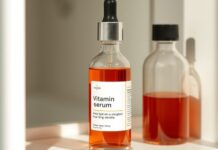
L-ascorbic acid, the active form of vitamin C used in many serums, can react with oxygen. Light, heat and the formula’s pH can also affect its stability. In water-based products, oxidation and further breakdown may show up as darkening. A serum that was clear or pale yellow and has turned noticeably deeper yellow, orange or brown may therefore have degraded.
That is a warning sign, not a test result. Colour cannot measure the amount of usable vitamin C left, confirm that a product still works as intended, or establish whether it is safe. The shade a serum starts with can vary, too: ingredients and vitamin C derivatives differ between formulas, and some products are not based on L-ascorbic acid. Check the ingredient list and the maker’s description rather than applying one colour rule to every bottle.
Why Light, Air And Formula Matter
In a 2011 laboratory study, Iqbal Ahmad and colleagues measured how ascorbic acid broke down in cream formulations exposed to ultraviolet light and in creams kept in the dark. The test products degraded in both conditions, but oxidation in the dark was about 70 times slower than degradation under light. The researchers also found that factors including pH, ingredient concentration, viscosity and other formulation properties affected stability. These results explain why limiting light exposure can matter; they do not predict the shelf life of every serum, since the study tested particular creams rather than all commercial products.
Packaging and formula work together. A tightly closed, opaque or otherwise light-protective container can help limit exposure, while repeatedly opening a bottle can introduce air. Formulators may also adjust pH, reduce water or use a more stable vitamin C derivative. Derivatives are not interchangeable with L-ascorbic acid, and research on particular ingredients does not establish that every product containing a derivative will stay stable for the same length of time.
For more on choosing a formula with stability in mind, see this guide to how to choose a vitamin C serum that stays effective.
How To Store Your Serum And Check Its Shelf Life
To help slow avoidable degradation, follow the product’s storage directions, close the cap firmly after each use and keep the bottle away from direct sunlight and heat. A cool, dark cupboard is often a practical place. Refrigeration is not automatically necessary; use it only if the manufacturer recommends it. A hot windowsill, car or steamy bathroom is a less dependable storage spot.
Look for an expiry or best-before date and, if shown, the open-jar symbol indicating how long the product is intended to be used after opening. The label’s date format can differ between countries, so check the packaging carefully. These dates and symbols are more useful than guessing a universal vitamin C serum shelf life: products have different formulas and packaging, and the time since opening matters.
- Note the serum’s original colour and the date you opened it.
- Check the label for storage instructions and the use-after-opening period.
- Contact the manufacturer if a product changes sharply before its stated use period; a batch number may help them assess it.
Is A Darkened Serum Worth Using?
If a serum has changed substantially from its original appearance, especially if it has become orange or brown, its vitamin C may have degraded. Because you cannot judge the remaining active amount by sight, continuing to use it may mean getting less of the ingredient you bought it for. Replacing it is a reasonable choice if the product is past its date or has changed markedly, but colour alone does not prove it is harmful.
Do not rely on appearance to rule out a problem, either. If the smell or texture has changed, the packaging is damaged, or using the product causes irritation, stop using it and ask the manufacturer or a clinician for guidance. A clinician can advise you about a skin reaction. No visual check can guarantee a serum’s effectiveness or safety.