







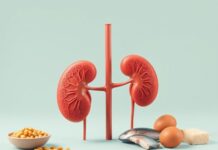













For adults without known kidney disease, research on kidneys and protein has not established that a higher-protein diet causes lasting kidney damage. It does show that filtration measurements can rise when protein intake increases. That response is not, by itself, proof of injury. The harder question—what happens after many years—remains unsettled because most trials lasted much less time.
What Kidneys And Protein Research Says About Filtration
The kidneys filter waste from the blood. After a protein-rich meal or a sustained increase in protein intake, filtration can increase—a response known as hyperfiltration. A higher filtration rate may reflect the kidneys adjusting to a larger workload; it does not automatically mean they are damaged. To assess kidney health, researchers also consider other measures, including blood creatinine and protein or albumin in urine.
A 2026 meta-analysis pooled 22 randomized trials in adults without chronic kidney disease (CKD). Participants eating higher-protein diets had higher estimated glomerular filtration rates (eGFR) than those on lower- or normal-protein diets. But blood creatinine did not significantly change across 19 trials involving 1,044 people. Because many studies estimated filtration using creatinine, and most were relatively short, the authors cautioned that the eGFR rise may reflect a short-term adjustment rather than lasting harm—or proof of long-term safety.
A 2018 meta-analysis by Michaela Devries and colleagues reached a compatible conclusion using a different comparison: filtration was slightly higher after higher-protein diets, but the change from participants’ starting measurements did not differ significantly between diet groups. That distinction matters. A higher final reading does not necessarily mean a person’s kidneys have declined or been injured.
What Longer-Term Studies Can—and Cannot—Tell You
Longer follow-up helps, but it does not settle the question on its own. In the US Cardiovascular Health Study, Jeannette Beasley and colleagues followed 3,623 adults aged 65 and older for an average of 6.4 years. They estimated protein intake from food questionnaires and tracked kidney-function changes using cystatin C, a blood marker. Higher protein intake was not associated with faster decline. Because this was an observational study, it can identify an association but cannot show that protein intake caused—or prevented—the outcome.
A 2024 meta-analysis by Yu Cheng and colleagues combined six observational studies, including 148,051 participants. Higher protein intake was associated with a lower rate of new CKD diagnoses. That finding does not mean protein protects the kidneys: diet estimates and other health differences can affect observational results, and the authors called for more research. Taken together, these studies have not shown that higher intake damages healthy kidneys, but they cannot rule out effects that might emerge over decades.
Definitions also vary. Trials have called diets “high protein” at different levels, sometimes based on the share of calories from protein and sometimes on grams per kilogram of body weight. The commonly cited adult reference intake is about 0.8 g/kg per day in the United States and 0.83 g/kg per day in WHO and European guidance. These are reference values, not a single upper limit that suits every adult. A diet’s total protein, food sources, duration and your health all matter.
When Protein Advice Changes
People with diagnosed CKD may need a different approach because their kidneys already have reduced function. Some CKD guidance uses a target near 0.8 g/kg per day for adults who are not on dialysis, while other restrictions may depend on disease stage and individual circumstances. A lower-protein diet is not automatically right for everyone with kidney concerns, and the right plan should account for nutritional needs as well as kidney health.
Diabetes, high blood pressure, previous abnormal kidney tests or protein in the urine are reasons to discuss your protein intake and kidney health with a clinician. They are not, on their own, proof that you need to restrict protein. A result showing protein in your urine is a separate finding from eating a high-protein diet; ask a clinician to interpret it, especially if it persists. If you have CKD or a risk factor, get individualized advice before making a major change. For more on supplements, see what research says about protein powders and healthy kidneys.
Bottom line: In adults without known kidney disease, short-term trials show changes in filtration estimates without consistent signs of kidney injury. Long-term effects are less certain. No one protein limit can be recommended for everyone, and CKD calls for tailored guidance rather than a blanket rule.