



















New, persistent swelling or a lump around a breast implant should be assessed, particularly if it appears years after surgery. BIA-ALCL (breast implant-associated anaplastic large cell lymphoma) is rare, and most implant-related changes are not this cancer. But a late fluid collection or mass needs investigation rather than guesswork.
What BIA-ALCL Can Look Like
BIA-ALCL is a lymphoma that develops in the tissue capsule around an implant. It most often appears as fluid collecting around one implant, sometimes causing sudden breast enlargement, asymmetry or discomfort. A lump beside the implant is less common but also needs assessment. The condition often presents years after surgery; one review of non-lymphoma and lymphoma capsule problems describes a typical onset around seven to 10 years after implantation.
Timing matters: a new swelling long after surgery is different from expected changes during early healing. It does not, however, identify the cause. Fluid around an implant is called a seroma. A review of capsular problems estimates that late seromas—those occurring more than a year after surgery—follow about 1–2% of implant placements, and most are caused by something other than BIA-ALCL.
Why Swelling Or A Lump Needs Checking
More common explanations include benign fluid collection, scar-tissue tightening (capsular contracture), implant rupture or displacement, and other changes in the capsule. These can cause swelling, firmness, pain or a change in breast shape. BIA-ALCL is one important possibility to rule out, not the explanation for every symptom.
Arrange an assessment with your surgeon or another clinician if swelling persists, returns, or comes with a new lump or other change around the implant. Bring any implant card or operation records you have. The manufacturer, model and surface type can help the clinician understand your history. If you cannot find the details, do not delay seeking care.
How Ultrasound And Fluid Testing Help Diagnose BIA-ALCL
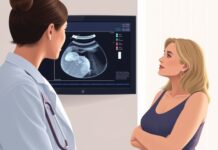
Ultrasound can show whether fluid has collected around the implant and help identify a mass. If there is fluid, a clinician may use a needle to take a sample for laboratory testing. The lab examines the cells and uses additional tests, including CD30 staining, to look for features of BIA-ALCL. CD30 results need to be interpreted with the other findings; they are not a diagnosis on their own. A lump may need its own imaging and tissue sampling.
Tell the clinician if you have had a textured implant in the past, even if it has since been exchanged for a smooth one. Diagnosis relies on appropriate testing of the fluid or tissue—not symptoms or implant type alone. If BIA-ALCL is suspected, assessment by clinicians experienced in the condition can help ensure the sample is handled and interpreted appropriately.
What Implant Surface And Regulator Advice Mean
The strongest established association is with textured implant surfaces, especially some macro-textured devices. The risk is linked to the shell surface, not simply whether the implant is filled with saline or silicone. In 2019, the US Food and Drug Administration (FDA) requested a recall of Allergan’s BIOCELL textured implants and tissue expanders because of their higher association with BIA-ALCL. That action concerned specific products; it does not mean every textured implant carries the same risk.
Regulatory advice is country-specific and can change. The FDA’s action is US guidance, not a statement of current policy in the UK, European Union or Australia. If you live elsewhere, check your national regulator’s current advice and discuss your exact device with your surgeon. A clinical review reported that the FDA did not recommend routine removal of textured implants in people without symptoms; do not assume a recall or risk notice means you should arrange surgery. Ask your clinician about current local guidance and your individual circumstances.
If you notice a persistent change, seek clinical assessment rather than trying to decide from symptoms alone whether it is cancer. Most late fluid collections are not BIA-ALCL, but testing is what helps distinguish the causes.