




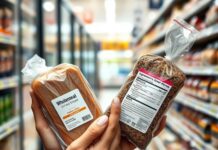

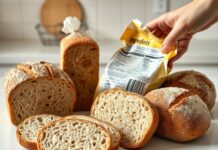













To choose whole wheat bread—or another genuinely wholegrain loaf—look past the colour, seeds and claims on the front. Check which flour comes first in the ingredients, look for a stated whole-grain percentage where available, and use fibre as a comparison rather than proof. Terms such as “whole wheat” and “wholemeal” also vary by region.
Start With The Grain, Not The Marketing
A whole grain keeps the grain’s three main parts: bran, germ and starchy endosperm. Refined white flour is made mainly from the endosperm. Bread made with wholegrain flour therefore contains the parts that milling removes from refined flour, but the front label alone may not tell you how much whole grain is in the loaf.
“Multigrain” means the bread contains more than one kind of grain; it does not, by itself, mean those grains are whole. The same caution applies to “seeded,” “brown” or “made with whole grains.” A loaf can contain some wholegrain ingredients alongside refined flour. For more on whole wheat versus whole grain, including how the terms compare, see our related guide.
Read The Ingredients And Look For A Percentage
Ingredients are generally listed in descending order by weight. If whole wheat flour, wholemeal flour or another clearly named wholegrain flour appears near the top, that’s a more useful clue than a picture of wheat or a dark crust. But the list’s order does not reveal the exact proportion. If a percentage is given, it helps you judge how much of that grain the bread contains.
There is no single wholegrain-food threshold used everywhere. The Whole Grain Initiative’s 2021 consensus definition proposed that a food contain at least 50% wholegrain ingredients by dry weight to be called wholegrain; foods with 25–50% could say they contain whole grain, but should not be named “whole grain.” The Healthgrain Forum, a separate expert group, recommended a different threshold: at least 30% wholegrain ingredients by dry weight, and more wholegrain than refined-grain ingredients. These are recommendations, not one universal rule for every bread label.
What “Whole Wheat” And “Wholemeal” Mean By Region
- United States: “Whole wheat” identifies wheat as the whole grain; “whole grain” can refer to other grains too. FDA guidance for a whole-grain health claim uses a threshold of 51% or more whole-grain ingredients by weight per customary serving amount. That criterion applies to the claim; it is not a single global standard for every front-label phrase.
- United Kingdom: “Wholemeal” is the familiar term. UK regulations define wholemeal flour as the entire edible grain after inedible parts are removed, and wholemeal bread is made with 100% wholemeal flour. “Multigrain” still doesn’t mean that all the grains are whole.
- European Union: There is no single minimum wholegrain percentage that applies uniformly across all member countries. Rules and guidance differ. Where a wholegrain ingredient is highlighted, its percentage may appear in the ingredients information, so check for a figure rather than assuming the product name guarantees a particular amount.
- Australia: “Wholegrain” and “wholemeal” are both used on bread. The material here does not establish one Australia-wide minimum wholegrain percentage for those front-label terms, so the ingredient list and any stated percentage remain useful checks.
Use Fibre As A Clue, Not A Definition
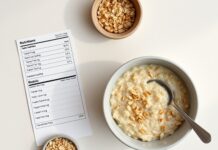
Fibre can help you compare similar loaves, especially when the nutrition panel gives values per 100 g (about 3.5 oz). But a fibre number cannot confirm that the bread contains the whole grain: fibre may come from ingredients other than intact wholegrain flour, and wholegrain breads can differ in fibre content.
A 2025 study by Hristo Hristov, Živa Lavriša and Igor Pravst analysed 58 bread samples in Slovenia. The wholegrain breads averaged 7.5 g of fibre per 100 g, compared with 2.9 g for white wheat breads. That finding shows a difference in the breads analysed—not a guaranteed fibre value for every wholegrain loaf or a standard that applies to bread in other countries. Compare products on the same basis, and check the ingredient list as well.
A Quick Label Check In The Aisle
- Find the flour named first in the ingredient list.
- Look for whole wheat, wholemeal or another wholegrain flour—not just “multigrain” or “brown.”
- Check for a wholegrain percentage if the package provides one.
- Compare fibre per 100 g between similar breads, without treating it as proof of wholegrain content.
These checks can help you make a more informed comparison, but labels do not always make wholegrain content easy to judge. When a loaf’s name is vague and no percentage is shown, the ingredients list and fibre panel offer clues, not a complete measure.