



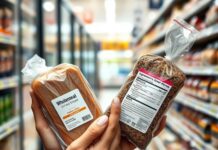





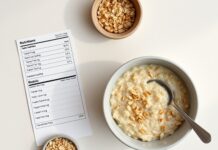











To sort out whole wheat vs whole grain, start with the ingredients, not the loaf’s colour or name. Look for a whole-grain flour or grain near the beginning of the list, then check whether the package states how much whole grain the bread contains. “Multigrain,” “seeded,” “brown” and “stoneground” do not, by themselves, tell you what proportion of the loaf is whole grain.
What Whole Wheat Vs Whole Grain Means
A grain counts as whole when its bran, germ and endosperm remain in their usual proportions. Refining removes some of these parts; a whole-grain flour keeps them. Whole wheat is one kind of whole grain: it is wheat with those components retained. Whole-grain bread can also use grains such as oats, rye, barley or corn.
That distinction matters when you read a label. “Wheat flour” alone does not tell you it is whole wheat flour. Look for wording such as “whole wheat flour,” “wholemeal flour,” or a named whole grain. Several grains in a loaf can all be refined, so “multigrain” describes variety, not how much whole grain is present.
Read The Ingredients, Not The Front Of The Pack
Check the ingredients for the flours and grains that make up the bread. If a whole-grain ingredient appears near the start of the list, that is a more useful sign than a prominent claim or picture on the front. If refined flour appears first and whole-grain ingredients later, the loaf may contain some whole grain without being mostly whole grain. Seeds can add texture and nutrients, but their presence does not show that the bread’s main flour is whole grain.
“Brown” is a colour, not a reliable measure of grain content. “Stoneground” describes a milling method, not whether bran, germ and endosperm are all present or how much whole grain is in the loaf. These terms may describe real qualities, but they do not answer the question you are shopping with: how much of the bread is whole grain?
When a package gives a percentage or grams of whole grain per serving, use that information to compare loaves. A clear amount is more informative than a general front-of-pack phrase. But note what the number refers to: whole-grain content is not the same as the percentage of the entire loaf that is whole grain.
Use Fibre As A Clue, Not A Substitute
Fibre is worth checking, especially when comparing similar serving sizes. But it cannot confirm that bread is whole grain: fibre may come from ingredients other than whole-grain flour, and a whole-grain claim does not automatically tell you how much fibre a slice provides. There is no single fibre number that proves a loaf is whole grain across all products and regions. Use the fibre panel alongside the ingredients and any quantified whole-grain claim, not instead of them.
Why The Label Depends On Where You Shop
In the United States, “whole wheat” points to wheat flour containing bran, germ and endosperm; “whole grain” can refer to other grains as well. The FDA’s February 2006 whole-grain guidance is explicitly a draft with nonbinding recommendations. It discusses factual statements such as grams of whole grains or “100% whole grain,” but does not create a universal percentage threshold for what makes a loaf mostly whole grain. Check the ingredient list even when the front makes a strong claim.
In the United Kingdom, “wholemeal” is a useful term to look for when you want whole-grain wheat. Across the EU, wording may vary by country and language. There is no globally uniform definition for when a finished food qualifies as “whole grain,” so do not assume the same front-of-pack wording carries the same threshold everywhere. In both markets, inspect the grain ingredients and look for a stated amount if you want to compare proportions.
In Australia, Food Standards Australia New Zealand defines a whole-grain ingredient by the presence of the grain’s main components in their usual proportions, and includes wholemeal. However, Australia does not regulate claims that state the amount of whole grain in a product. A voluntary industry code uses “contains,” “high” and “very high in whole grain” for products with at least 8 g, 16 g and 24 g per manufacturer serving, respectively. Those figures help interpret a claim made under the code; they are not a general legal threshold for every loaf.
For a quick decision, match the package claim to the ingredient list, and compare whole-grain amounts and fibre on a similar serving basis. A loaf can be seeded, dark or made with several grains and still contain mostly refined flour. The label’s grain ingredients—and any clear quantity—tell you more than its appearance.