











For people with estrogen-receptor-positive (ER-positive) breast cancer, current human research on soy foods breast cancer outcomes does not show that eating ordinary soy foods increases recurrence or interferes with treatment. Studies have often linked soy foods with better outcomes, but these findings do not prove that soy prevents cancer from returning. Evidence about foods such as tofu, tempeh, edamame, and soy milk also should not be taken as evidence that concentrated isoflavone pills are safe.
Soy Foods Breast Cancer Research On Recurrence And Survival
A 2023 systematic review and meta-analysis by van Die and colleagues combined findings from 32 observational articles on plant compounds and outcomes after breast cancer. Soy isoflavone intake was associated with a 26% lower risk of recurrence overall. For ER-positive survivors, the association was smaller: a hazard ratio of 0.82, meaning a lower observed rate of recurrence in the higher-intake groups. The researchers also found an association between soy foods and lower breast-cancer-specific mortality in people with ER-positive disease.
These results are encouraging, but they cannot show that soy caused the better outcomes. People were not randomly assigned to eat soy, and dietary habits can be connected with other differences in health and lifestyle. The review also noted that it remains unclear whether starting or substantially increasing soy after diagnosis has the same association as having eaten it before diagnosis.
A large example is the Shanghai Breast Cancer Survival Study, led by Xiao Ou Shu and colleagues. It followed 5,033 surgically treated women in Shanghai, China, recruited between 2002 and 2006. Researchers repeatedly assessed soy intake, including tofu and soy milk, and tracked recurrence and deaths. Over a median 3.9 years of follow-up, higher soy-food intake was associated with lower recurrence and mortality. The association appeared in women with ER-positive as well as ER-negative cancers, and among tamoxifen users and non-users. This is useful evidence about women in Shanghai and the foods measured there; it does not establish the same effect for every population, diet or soy product.
Why Soy Foods Are Different From Supplements
Soy contains isoflavones, plant compounds that can bind to estrogen receptors. That helps explain why soy has raised questions for people with hormone-sensitive cancer. But a food’s effects in the body cannot be inferred simply from that binding, or from experiments in cells and animals. Human studies have not found consistent changes in breast-cell growth or other markers that would suggest soy foods promote breast cancer.
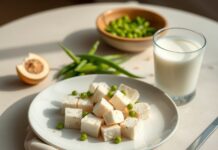
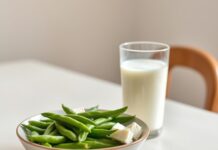
Tofu, tempeh, edamame and soy milk are foods with protein and other nutrients as well as isoflavones. Capsules, extracts and powders can deliver concentrated amounts, sometimes at levels well beyond those typically consumed in food. Long-term studies of breast cancer outcomes have mainly examined food intake, not high-dose supplements. A 2013 systematic review concluded that evidence was not sufficient to recommend high-dose isoflavone supplements for people with breast cancer. A 2025 review suggested keeping to no more than about two servings of traditional soy foods a day, roughly 50 mg of isoflavones—not because higher food intake has been shown to be harmful, but because relatively few population studies included people eating more.
Tamoxifen, Aromatase Inhibitors And Regional Guidance
Laboratory and animal experiments have raised the possibility that isoflavones could affect tamoxifen, but human observational studies have not shown that eating soy foods weakens tamoxifen’s effect. A 2025 review by Mark Messina and Sarah Nechuta also found no sign of interference with tamoxifen or aromatase inhibitors in the limited observational data available. That is reassuring, but it is not the same as a long-term randomized trial testing these medicines with different soy intakes.
Advice can differ by country and organization. Cancer Council Australia says survivors do not need to avoid soy foods, while a 2017 Irish Cancer Society document cautions against soy for people with hormone-sensitive cancer taking tamoxifen. The difference matters if you have been given specific advice locally; ask your oncology team to clarify whether it concerns ordinary foods or supplements. For more detail on food choices during treatment, see what to know about soy during breast cancer treatment.
If you already enjoy soy foods, the research does not give a clear reason to remove them from your diet during or after treatment. If you are considering an isoflavone supplement, check with your oncologist or oncology dietitian first and bring the product label. Do not change or stop prescribed endocrine therapy based on diet research.