


















Vitamin C benefits for skin may include support for uneven pigmentation and signs of photoaging, but a serum’s percentage alone does not tell you how well it will work. The form of vitamin C, the formula’s acidity and stability, and how the product is packaged all matter. The research offers reasons for interest, but not a guarantee that a particular bottle will fade your spots or wrinkles.
What Vitamin C Benefits For Skin Can Realistically Mean
L-ascorbic acid (LAA), the active form of vitamin C, is an antioxidant. It can help counter oxidative stress from ultraviolet (UV) exposure, supports collagen production, and may reduce melanin formation by affecting tyrosinase, an enzyme involved in pigment production. These mechanisms help explain why it is used for uneven tone and photoaging; they do not, by themselves, prove a visible benefit from every serum.
A 2020 systematic review by Rizwan M. Sanadi and Revati S. Deshmukh found only seven eligible studies on vitamin C and melanin pigmentation: one randomized controlled trial and six experimental studies. The studies covered different approaches and tissues, so the review does not establish how well a typical over-the-counter serum will work for a particular dark spot or skin condition.
For photoaging, a 2015 study in Cluj-Napoca, Romania, followed 60 healthy women aged 20 to 75 with Fitzpatrick skin types II and III. Participants applied either a 5% vitamin C-based solution or a moisturizer for 60 days; researchers used ultrasound to assess skin structure. The vitamin C group showed changes the researchers interpreted as consistent with increased collagen synthesis. But the product also contained other ingredients, and ultrasound measurements are not the same as showing that wrinkles visibly improved. The results also do not establish effects for other populations or formulas.
Why Concentration And pH Are Not The Whole Story
In a 2001 absorption study, S. R. Pinnell and colleagues applied LAA and derivatives to pig skin and measured skin levels of LAA. They found that LAA needed a pH below 3.5 to enter the skin and that absorption reached its maximum at 20% concentration. This was a skin-delivery study in pigs, not a human trial measuring fading spots or smoother skin. It does not mean every person should seek a 20% serum: a higher percentage is not proof of a better visible result, and concentrated, acidic products may be harder to tolerate.
The formula matters because pH, concentration, ingredients and delivery system work together. A label showing a high percentage cannot tell you whether the product remains stable or delivers the ingredient as intended. If a brand provides information about the vitamin C form and formulation, consider that alongside the concentration rather than treating the number as a score.
L-Ascorbic Acid Versus Vitamin C Derivatives
LAA is vitamin C itself, but it is vulnerable to degradation, especially in aqueous solutions. Derivatives—including magnesium ascorbyl phosphate and ascorbyl palmitate—are modified forms used in attempts to improve stability. Their properties and skin delivery can differ from LAA, so evidence for one form should not automatically be applied to another.
In the pig-skin study, the tested derivatives did not increase measured skin levels of LAA. That result does not prove that all derivatives or finished products are ineffective: it measured a specific outcome in a specific model. A 2022 study of encapsulated magnesium ascorbyl phosphate in specially designed gels for people with melasma reported reduced melanin levels, but those delivery systems are not equivalent to ordinary retail serums. Product choice should account for both the specific derivative and the evidence for its finished formula.
Storage, Oxidation And Irritation
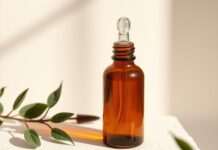
Because LAA can oxidize, packaging and storage can affect how well a product holds up. An opaque, well-sealed container that limits exposure to air and light is a sensible feature to look for; follow the product’s storage directions and keep the cap closed. Formulation approaches such as encapsulation are also being explored to improve stability, but packaging alone cannot confirm a serum’s potency or performance.
A noticeable shift in color toward yellow, orange or brown can be a sign of oxidation in an LAA serum. Oxidation may mean less active vitamin C remains; color change alone does not establish that a product is harmful. If the serum changes markedly, smells different or is past its stated usable period, check the label and consider replacing it rather than relying on it for results.
Stinging or irritation is possible, particularly with acidic or more concentrated formulas. If a product causes persistent discomfort, stop using it and seek advice from a clinician, especially if you have a skin condition or the pigmentation is changing or concerning. Vitamin C is not a substitute for sunscreen: UV exposure can contribute to pigmentation and photoaging, so daily sun protection remains important. For help comparing formulas, see this guide to choosing a vitamin C serum for uneven tone.