

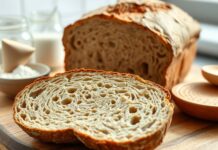

















Some sourdough breads contain less fructan—the main FODMAP in wheat bread—than conventional, quickly made wheat bread, but laboratory measurements do not show whether a bread will ease IBS symptoms. Human studies have tested particular breads, not sourdough as a whole, and fermentation method and serving size can affect the results. So sourdough is not automatically low fodmap bread or gluten-free, and the name alone cannot tell you how you’ll tolerate a loaf.
Why Fermentation Can Change FODMAP Levels
FODMAPs are fermentable carbohydrates that can trigger gut symptoms in some people with IBS. In wheat-based bread, fructans are a key concern. Yeasts and lactic acid bacteria used in fermentation can break down fructans, but they do not all do so to the same extent. Some fermentation processes can also produce other FODMAPs, such as mannitol. The finished bread’s composition depends on the microbes, flour and process—not just whether the label says “sourdough.”
A 2018 laboratory study by Vera Fraberger and colleagues compared 13 sourdough-related yeast strains in a model wheat-carbohydrate system and wheat-flour mixtures. The researchers measured fructan breakdown and gas production. The strains differed substantially; a Saccharomyces cerevisiae strain isolated from traditional Austrian sourdough showed the greatest fructan reduction in their tests. This helps explain why fermentation can lower fructans, but it was not a trial in people with IBS. It cannot show that a shop-bought loaf will have the same composition or improve symptoms.
What Human Studies Say About Sourdough Bread And IBS
Human findings are more specific—and less conclusive—than the laboratory results. In a 2018 review, Jussi Loponen and Michael Gänzle summarized clinical studies of specially made, low-FODMAP, high-fiber rye sourdough bread. They described promising results for gut fermentation and gastrointestinal symptoms. That is encouraging for those particular breads, but it does not establish that ordinary wheat sourdough is low in FODMAPs or better tolerated by everyone with IBS.
A broader systematic review by Léa Ribet and colleagues, published in 2022, included 25 clinical trials involving 542 adults and compared sourdough breads with yeast breads. Five trials focused on gastrointestinal markers. The review concluded that results do not establish a consistent health benefit from sourdough itself; breads and fermentation conditions varied, and the trials examined different outcomes. Those findings put the IBS-specific results in context: a product made and tested to reduce FODMAPs is not interchangeable with sourdough as a category.
How To Choose Low FODMAP Bread
For low fodmap bread, look beyond the word “sourdough.” If you are following a low-FODMAP plan, a product tested for FODMAP content at a stated serving gives you more relevant information than a general claim about long fermentation. If you buy from a bakery, you can ask what flour and fermentation process it uses, though the answer alone cannot confirm the finished loaf’s FODMAP level.
Serving size matters because it changes how much fructan you eat. A slice that suits you may not be equivalent to several slices, and bread eaten alongside other foods containing FODMAPs adds to the meal’s total. There is no universal slice size that makes all sourdough low FODMAP. During a structured elimination or reintroduction plan, use the portion guidance for the specific bread and track your response. A FODMAP reintroduction plan can help you test foods methodically rather than avoid them indefinitely.
Sourdough Is Not Automatically Gluten-Free
Most sourdough made with wheat or rye still contains gluten. Fermentation does not make an ordinary wheat loaf safe for someone with coeliac disease, who needs to avoid gluten. Gluten and fructans are different components: reducing fructans may matter for some IBS symptoms, but it does not remove gluten. If you have coeliac disease, choose bread specifically made and labelled gluten-free; if you are unsure what is triggering symptoms, discuss it with a clinician or dietitian before making major dietary restrictions.
Bottom line: Some carefully controlled sourdough fermentations reduce fructans, and specific low-FODMAP sourdough breads have shown promising results in clinical testing. But a long-fermented label is not proof of low FODMAP content or better IBS tolerance. Check the particular bread, its tested portion if available, and your own response.