







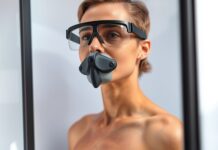









For prolonged exercise, aim to replace enough fluid to limit substantial losses without trying to replace every drop of sweat. If you want a more personal starting point, calculate sweat rate during a session similar to the one you are preparing for. Your needs change with pace, duration, and conditions, so a fixed amount per hour is not right for everyone.
When to drink to thirst—and when to plan ahead
For shorter, easier exercise—roughly under an hour to 90 minutes—drinking when you feel thirsty may be enough, particularly in cooler conditions. For longer sessions, hard efforts, or exercise in the heat, thirst-led drinking may not keep up with high sweat losses. A plan based on your own experience can help you avoid large fluid deficits without encouraging you to drink more than you need.
Robert W. Kenefick’s 2018 review, “Drinking Strategies: Planned Drinking Versus Drinking to Thirst,” describes both approaches as context-dependent. It identifies longer activities, especially in the heat, and high-intensity exercise with high sweat rates as situations where planned drinking may be useful. The review also cautions against drinking enough to gain body weight during exercise. That is a useful guardrail: your goal is not to finish heavier than you started.
How to calculate sweat rate
Weigh yourself just before and immediately after a representative workout, and note how much you drink and any urine passed during the session. Use kilograms and litres:
Estimated sweat loss (litres) ≈ pre-exercise weight (kg) − post-exercise weight (kg) + fluid consumed (litres) − urine passed (litres).
Divide the estimated sweat loss by the workout duration in hours to get an approximate sweat rate in litres per hour. For example, a 1 kg change in body weight is roughly equivalent to 1 litre of water. If you did not drink or pass urine during the session, the weight difference alone gives a rough estimate. The calculation is not exact, so treat it as a guide rather than a target you must match sip for sip.
Repeat the measurement in conditions like the ones you expect to face: temperature, pace, and duration can all affect sweat loss. Use the result to inform a flexible plan, not to force fluid intake when you are not thirsty. Kenefick’s review discusses a body-mass change of around 2% as a point associated with changes in cardiovascular and heat strain, and sometimes performance. It is not a universal cutoff: effects vary with the person and conditions.
Sports drink or water?
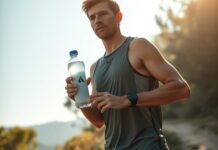
Water can be suitable for shorter or lower-intensity sessions. During longer, harder exercise, a sports drink can provide carbohydrate as well as fluid and sodium, which may be useful when you also need fuel. But a sports drink is not automatically necessary for every workout, and its sodium content does not make excessive drinking safe.
Exercise-associated hyponatremia is a dangerously low blood sodium level that can occur when someone drinks excessively and retains too much dilute fluid. It is not solved simply by choosing a drink with electrolytes. Lawrence E. Armstrong’s 2021 review of endurance-exercise rehydration describes both dehydration and overhydration as risks, with the balance depending on the athlete and event. For more on the specific risk, read about exercise-associated hyponatremia and overdrinking.
Use your estimate as a guide, not a drinking quota
Research does not establish one fluid rate that suits all prolonged exercise. A 2004 review of endurance performance suggested specific hourly intake ranges, while later reviews emphasize differences in sweat rate, effort, duration, and environment. Those differences matter: a rate drawn from one group or event may not fit your conditions. The more useful approach is to learn how your body responds, use thirst as a cue, and consider a measured plan for demanding or lengthy sessions—while avoiding weight gain during exercise.
If you feel seriously unwell during or after prolonged exercise, seek urgent medical help. If you have a health condition that affects fluid balance or need a plan for an endurance event, ask a clinician for advice tailored to you.