

















Ackee poisoning can occur after eating unripe fruit or parts that remain toxic even after ripening. To reduce the risk, use only ackee that is fully ripe and has split open naturally, eat only the pale edible arils, and don’t rely on cooking to make unripe fruit safe.
How To Prevent Ackee Poisoning
The main concern is hypoglycin A, a toxin found at high levels throughout unripe ackee. As the fruit ripens naturally and opens along its seams, hypoglycin A falls to negligible levels in the arils—the soft, pale yellow parts eaten as food. In the body, the toxin can interfere with energy metabolism and cause blood sugar to drop dangerously low. This illness is known as Jamaican vomiting sickness.
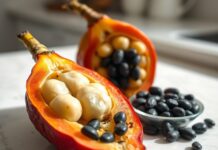
A ripe fruit has a yellow rind, often with red coloring, and splits open to reveal the arils. Do not treat color alone as proof of safety: the fruit must be fully open after ripening, not cut or forced open while still closed. Fruit that has been heated or otherwise made to split prematurely may not have had time to lose its toxin.
Remove The Seeds, Rind And Membrane
Eat only the ripe arils. Discard the rind and the hard, glossy black seeds; both can retain high levels of hypoglycin A even when the fruit is ripe. Remove the pinkish membrane, called the raphe, between each aril and its seed. Proper ripening makes toxin levels in the raphe low, but it is still removed during processing and should not be treated as an edible part.
Discard fruit that is bruised, damaged, spoiled, or has failed to open naturally. If you are preparing fresh ackee, do not use cooking water from unripe fruit or reuse water that may have contacted it. When you cannot be sure the fruit ripened and opened naturally, do not eat it.
Cooking Does Not Neutralize Hypoglycin A
Hypoglycin A is heat-stable. Boiling, frying or baking does not reliably destroy it, so cooking cannot turn unripe ackee, seeds or rind into safe food. Cooking is part of preparing edible arils for a dish; it is not a substitute for correct ripening and trimming.
This distinction matters because ackee is often served cooked, including in Caribbean dishes. A cooked dish is not automatically safe if the fruit was harvested too early, forced open, or improperly processed. Start with safely ripened arils, then prepare them as your recipe directs.
Is Canned Ackee Safe?
Commercially canned or frozen ackee can be safe when it has been properly processed from naturally ripened fruit, with the rind and seeds removed. You cannot confirm its hypoglycin level by looking at the contents, so choose a product from a reputable retailer and follow its storage and use instructions.
In the United States, the FDA assesses ackee processors and their food-safety controls before considering products for import. Its current import information identifies processors that have demonstrated controls for selecting ripe fruit and excluding seeds and rind. This is useful context for US shoppers, but it is not a universal approval system: the FDA’s import controls do not establish how products are regulated in the UK, EU, Australia or elsewhere. Wherever you shop, check the product’s origin and local food-safety information if you have concerns.
Ackee Poison Symptoms Need Urgent Attention
After eating unsafe ackee, a person may have no symptoms or may develop vomiting. Severe poisoning can involve repeated vomiting, profound low blood sugar, unusual drowsiness, marked weakness or exhaustion, confusion, seizures, coma and, in some cases, death. The symptoms can be serious even if the meal looked or tasted normal.
If someone becomes ill after eating ackee—especially with repeated vomiting, unusual sleepiness or weakness, confusion, fainting or a seizure—seek emergency medical care now. Tell clinicians that ackee may have been eaten and, if possible, keep the packaging or details about how the fruit was prepared. Do not wait to see whether severe symptoms pass; prompt assessment and treatment are important.