

















Vitamin C serum oxidation matters because an unstable formula may lose some of the activity you bought it for. L-ascorbic acid (LAA), the active form most often discussed in skin research, has the clearest clinical track record for photoaging and uneven pigmentation—but it is difficult to keep stable and deliver through the skin. More stable derivatives may suit some people, though their clinical evidence is less established. No vitamin C serum replaces sunscreen.
Vitamin C Serum Oxidation: What Color And Packaging Can Tell You
LAA is sensitive to degradation, including through oxidation. A formula that changes noticeably from clear or pale to yellow-brown may be oxidizing. Color is a warning sign, not a precise test of how much active ingredient remains or whether a product has stopped working.
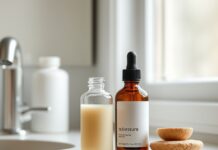
Packaging can help limit exposure to air and light. A well-sealed, light-protective container is a sensible choice, but packaging alone cannot guarantee stability: the formula, manufacturing and storage also matter. Check the product’s storage instructions and use its own appearance and directions as a guide rather than relying on a universal color cutoff. If the serum has changed substantially or its smell or texture has shifted, check the brand’s guidance before continuing.
L-ascorbic acid or a derivative?
LAA has evidence for antioxidant activity, collagen synthesis and reducing excess pigmentation. A 2026 systematic review by Tanya Boghosian and colleagues assessed 44 studies published from 2020 onward. It described LAA as the most clinically validated form, particularly in stabilized, low-pH formulas. The review also noted promising findings for derivatives, but concluded that results depend on the ingredient, vehicle and delivery method.
Derivatives such as magnesium ascorbyl phosphate and ascorbyl glucoside are designed to be more stable. That can make them appealing if a product containing LAA discolors quickly or feels uncomfortable. But stability in a bottle does not prove that a derivative penetrates skin well or produces the same results as LAA. A 2022 review by Louise Idalgo Vasques and colleagues found that research on many derivatives was mostly laboratory-based and called for larger, more standardized studies in people.
There are individual clinical signals, not a clear winner for every concern. In a split-face study of people with melasma, Soha M. Kandil and colleagues tested two gel formulations using magnesium ascorbyl phosphate in different vesicular carriers. Pigment measurements decreased after one month with one gel and after six months with the other. That study compared delivery systems for one derivative; it did not show that the ingredient outperforms LAA or other melasma treatments.
Concentration, pH and irritation
A higher percentage is not automatically better. Concentration is one part of a formula’s performance, alongside pH, stabilizers and the vehicle that carries the ingredient. LAA products commonly use an acidic pH to support delivery, but a low-pH formula or a higher concentration may sting or irritate, especially on sensitive skin. The research does not establish one ideal concentration or pH that works for everyone.
If you are prone to irritation, consider a lower-strength product or a derivative, and follow the label’s directions. Stop using a product that causes persistent or marked discomfort. Ongoing redness, swelling or pigmentation changes are reasons to seek advice from a clinician or dermatologist rather than assuming the serum is the cause.
Why vitamin C complements sunscreen
Vitamin C’s antioxidant activity gives it a plausible supporting role against oxidative stress from UV exposure, and clinical research suggests topical LAA may help improve signs of photoaging. But a serum is not sunscreen: it has no reliable SPF protection unless it is specifically formulated and labelled as a sunscreen. Use a broad-spectrum sunscreen as directed to help prevent further sun damage and darkening of uneven pigmentation. Vitamin C can be an additional skincare step, not a substitute.
Overall, choose based on the formula you can tolerate and use consistently—not the biggest percentage on the label. LAA has the stronger clinical footing; derivatives offer stability and may be more comfortable, but comparative evidence remains limited. If pigmentation is persistent or worsening, a clinician can help assess its cause and suitable treatment options.