











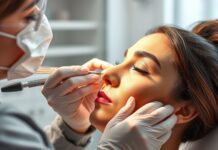









Is eyelash tinting safe? It can cause allergic reactions, and dye near the eye carries a risk of injury. A patch test may flag a skin reaction, but it cannot guarantee that tinting your lashes will be safe. In the United States, the FDA advises against dyeing eyelashes at home and says permanent lash and brow dyes have caused serious eye injuries, including blindness.
Is Eyelash Tinting Safe? The Short Answer
There is no single answer for every tint, ingredient, country, or application. Tinting involves placing a colouring product close to a sensitive area, so both the formula and how it is applied matter. A salon setting does not remove the possibility of allergy or accidental eye exposure; using a product according to its label and intended use matters too.
A literature review by Maliha Masud and colleagues, affiliated with the University of Utah Health Sciences Center and Hoopes Vision, examined published reports of adverse effects from eyelid cosmetic procedures, including eyelash dyeing. Allergic contact dermatitis featured prominently in those reports. That does not tell you how often people who get lash tints react: reports of complications are not a representative sample of everyone who has the procedure.
A 2025 case report described one woman who developed eyelid inflammation after tinting and later lost pigment in many of her eyelashes. A single case cannot estimate how likely this outcome is, but it illustrates that a reaction may have effects beyond short-lived redness.
What A Patch Test Can—and Cannot—Tell You
A patch test puts a small amount of product on the skin to check for a reaction. A clear result is useful information, but it is not a safety guarantee. The test does not show how your eye will respond if product gets into it, and it cannot rule out every reaction during or after the full treatment. A person may also become sensitive after earlier uneventful uses.
Follow the product’s specific instructions rather than borrowing a test method or timing from hair dye. The FDA recommends patch testing hair dye before each use, but it separately advises never to dye your eyelashes or eyebrows at home. Passing a hair-dye patch test does not override that warning or establish that the product is suitable for lashes.
If you have reacted to hair dye or black henna, take that history seriously and discuss it with a clinician before considering a tint. For context on that related allergy risk, see how black henna can relate to hair-dye allergy.
How Product Rules Differ By Region
Rules for hair dye are not the same as approval for use on eyelashes. In the US, the FDA says only a limited silver-nitrate product is provided for safe use to colour lashes and brows: it must be for professional use, contain no more than 4% silver nitrate in a viscous gel, be applied for no longer than one minute, and not be used on anyone under 16. It is not for direct sale to consumers. The FDA also warns about eyelash and eyebrow dyes containing coal-tar colours. These narrow provisions do not mean any product labelled “professional” is approved for lash use.
In the EU, rules for oxidative hair dyes include a maximum concentration for PPD after mixing and warnings that such products are not intended for colouring eyelashes or eyebrows. That hair-dye limit is not a lash-tint approval. In the UK and Australia, check current national cosmetics or consumer-safety guidance and the product’s stated intended use; do not treat online availability or a salon’s offer as proof that a dye is suitable for lashes. Requirements can change, so verify them locally before booking.
Before You Book—and If Something Goes Wrong
Ask which product and ingredients will be used, whether its label specifically permits lash use in your country, and what the provider will do to prevent it entering your eye. Do not use ordinary hair dye on your lashes at home. If you have a history of reactions, or your eyes or eyelids are already irritated, get advice from a healthcare professional before proceeding.
Stop the treatment and seek medical advice if you develop a significant reaction. Eye pain, changes in vision, or marked swelling warrant prompt assessment. The FDA advises contacting a healthcare provider after a bad reaction to an eye cosmetic; this article cannot determine the cause or severity of symptoms.