













Plant sterol foods can lower LDL cholesterol, but the expected benefit is modest and depends on taking enough every day. At the commonly studied intake of 1.5–2.4 g (about 1,500–2,400 mg) of plant sterols or stanols daily, LDL may fall by roughly 7–10%. That reduction has not been shown to prevent heart attacks or strokes, so fortified products are an optional addition—not a replacement for prescribed treatment.
The LDL effect of plant sterol foods
Sterols and stanols resemble cholesterol and reduce how much cholesterol the gut absorbs. Ordinary diets provide only about 300 mg of plant sterols a day, far below the amount used in cholesterol-lowering trials. Nuts, seeds, vegetable oils, grains, beans and vegetables contain them naturally, but fortified foods are designed to deliver a larger dose.
A meta-analysis by Suhad AbuMweis, Roula Barake and Peter J.H. Jones pooled 59 randomized trials published from 1992 to 2006. The researchers measured LDL changes and found that products containing plant sterols lowered LDL by an average of 0.31 mmol/L compared with placebo. The effect varied: it tended to be larger in people with higher starting LDL, and results differed by food carrier and how often products were consumed. Jones was affiliated with the Richardson Centre for Functional Foods and Nutraceuticals at the University of Manitoba in Winnipeg; the pooled trials were not conducted at one location.
Most guidance centers on about 2 g daily, taken with meals. The effect requires regular use: the British Dietetic Association notes that the benefit stops when you stop eating the products. Trial summaries do not establish one duration that guarantees a particular result, so think of this as an ongoing dietary measure rather than a short course. A review by Kirsi Laitinen and Helena Gylling described greater LDL reductions with much higher doses of plant stanols, including up to 18% at 9–10 g daily. That finding came from only five high-dose studies and does not establish a routine target; higher intakes are not a reason to exceed product directions.
What a lower LDL does—and does not—tell you
Lower LDL is a useful change in a risk factor, but it is not proof that a particular food prevents cardiovascular events. Long-term randomized trials have not established that sterol- or stanol-fortified foods prevent heart attacks or strokes. An older estimate of possible heart-disease risk reduction was based on cholesterol changes, not on trials showing fewer events. Keep that distinction in mind when reading a product’s health claim.
In the United States, a 2007 review noted that the FDA permitted a health claim connecting dietary plant sterols with reduced coronary heart disease risk. The UK British Dietetic Association’s food fact sheet, by contrast, says there is not enough evidence to show that these products prevent heart problems or strokes. These statements concern different things: a permitted claim is not the same as direct proof from outcome trials. Exact claim rules and wording can change, and the sources named here do not establish current requirements in the EU or Australia. Check the local label and regulator guidance rather than assuming a claim transfers between countries.
Using fortified products with treatment
Research supports using fortified foods alongside cholesterol-lowering medication, not instead of it. Do not stop or change a statin or other prescription because you start a spread or drink. If you take ezetimibe, ask your prescriber before adding one: both affect cholesterol absorption, and the UK fact sheet says the combination is not usually recommended because extra benefit may be limited.
Cost and overall diet matter too. If fortified products are expensive, prioritizing a heart-healthy eating pattern may be a better use of your food budget. For another food-based LDL option, see this guide to oat beta-glucan and its studied daily amount.
Check the dose, not just the front of the pack
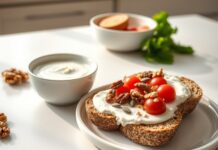
Fortified spreads, milks, yogurts and yogurt drinks are common options. Check the nutrition or ingredient panel for the amount of plant sterols or stanols per serving, then calculate how many servings provide the product’s stated daily amount. Some fortified servings provide around 0.5–0.8 g; a small yogurt drink may provide about 2 g. Take them with meals, and do not combine products without adding up the total. The UK fact sheet cautions that more than 3 g daily is unlikely to lower LDL further and may affect absorption of fat-soluble vitamins. Choose fruit and vegetables, including beta-carotene-rich options such as carrots or spinach.
These products are not usually useful if your cholesterol is normal. They are not recommended for children or for people who are pregnant or breastfeeding unless a doctor or dietitian advises them. People with sitosterolemia, a rare inherited condition involving high plant sterols, should seek specialist advice before using them. If you have a cholesterol condition, take medication, or are unsure whether a fortified product fits your care plan, check with a clinician or dietitian.