







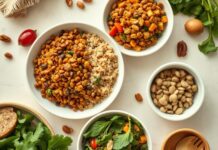













If you’re looking for low glycemic fruits, how you eat the fruit matters as well as which fruit you choose. Whole fruit is generally the more filling option: juice has less fibre and is easy to drink quickly, while a smoothie made with whole fruit usually keeps its pulp unless it is strained. But short-term blood-glucose changes are not the same as proof that a food raises or lowers your long-term risk of type 2 diabetes.
How low glycemic fruits compare when whole, juiced or blended
Whole fruit keeps its natural structure and fibre. Juicing separates much of that fibre from the liquid, and processing or storage can reduce some vitamins and other plant compounds. The sugars in 100% fruit juice are also classed as “free sugars” by the World Health Organization; sugars in intact fruit are contained within its structure.
That difference can affect how filling the food is and how much you consume. It takes several oranges to make a glass of juice: a 140 g (about 5 oz) orange contains around 12 g of sugar, while three to four oranges can produce about 240 mL (8 fl oz) of juice. A glass can therefore deliver the fruit from multiple pieces in a few sips. A smoothie retains more fibre if you blend the whole fruit and do not strain it, but its drinkable texture can still make a larger amount easy to consume quickly.
These factors give a reasonable basis for choosing whole fruit more often. They do not mean every juice or smoothie will cause a larger glucose rise than every piece of fruit; ingredients, portion size and your own response matter.
What glucose studies can—and cannot—tell you
A short-term study can measure blood glucose after a meal or over a limited period. It can help compare immediate responses, but it cannot by itself show whether a person will develop type 2 diabetes years later. The research summarized here does not establish one universal post-meal glucose response for whole fruit, juice and smoothies.
Longer-term observational research asks a different question: how people’s usual eating patterns relate to later health. In a 2025 review, Hemangi Mavadiya and colleagues at the University of California, Irvine, compared research on whole fruit and 100% juice, including observational and intervention studies. They concluded that findings for juice and chronic health outcomes were inconsistent, while the benefits associated with whole fruit were more consistent. Because observational associations do not prove cause and effect, this does not show that juice causes diabetes or quantify your individual risk.
For people who already have diabetes, a separate 2023 meta-analysis by Yu Ren and colleagues combined 19 randomized trials involving 888 participants. Fruit consumption was associated with lower fasting blood glucose, but the analysis found no significant change in HbA1c. The trials included different forms of fruit and did not establish that whole fruit, juice and smoothies have identical effects. The finding supports including fruit in diabetes eating patterns; it is not a direct comparison of these three forms.
Portions and regional advice differ
Guidance varies by country. The UK Eatwell Guide limits fruit juice and smoothies together to 150 mL (about 5 fl oz) a day, counted as no more than one fruit-and-vegetable portion. The 2020–2025 US Dietary Guidelines said at least half of recommended fruit intake should come from whole fruit, leaving room for some juice. These are different approaches, not a universal serving rule; check current guidance where you live.
For an everyday choice, start with whole fruit and use a measured glass if you choose juice. For smoothies, blend whole fruit without straining it, keep the serving moderate and be mindful of extra juice or sweeteners. Labels matter too: a fruit drink is not necessarily 100% juice.
Fruit is not automatically off-limits if you have diabetes. If you are unsure how a particular portion fits your eating plan or glucose readings, ask your clinician or a registered dietitian for advice tailored to you.