








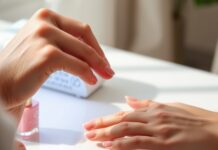





A gel polish allergy is usually a delayed skin reaction to acrylates or methacrylates in nail products. The main avoidable concern is skin contact with uncured gel: these reactive ingredients can cause sensitization, while the hardened product is generally less likely to do so. Careful application can reduce exposure, but it cannot guarantee that an allergy will not develop.
This matters with at-home kits as well as salon manicures. Gel can touch the surrounding skin during application, and a lamp does not make skin exposure harmless. If you develop a rash after gel nails, stop using the suspected product and get medical advice rather than trying another kit to see what happens.
Gel polish allergy symptoms to look out for
Allergic contact dermatitis often causes itchy, red, swollen or scaly skin around the nails and fingertips. Blisters, cracks or painful inflammation can also occur. Nails may become distorted or lift from the nail bed. The rash can sometimes appear away from the nails, including on the face or eyelids, if product is transferred there by the hands.
The reaction is delayed, so symptoms may not appear during the manicure itself. Appearance alone cannot reliably tell you whether a rash is an allergy, irritation or another skin condition. A clinician can assess the pattern and, when appropriate, arrange patch testing to identify the cause.
Why uncured gel on skin is the key concern
Gel products contain acrylates or methacrylates that harden through polymerization. Before they have fully cured, reactive monomers can remain available to trigger allergy after skin exposure. The concern is not simply that a product contains HEMA (2-hydroxyethyl methacrylate): other acrylates can also be allergens.
In a 2023 online market survey, Iemke Steunebrink, Anton de Groot and Thomas Rustemeyer examined 394 nail cosmetics in relation to EU ingredient rules. HEMA appeared in nearly 60% of the products and di-HEMA trimethylhexyl dicarbamate in 34%; the researchers also identified 45 other acrylates. This was a survey of products, not a study of how many consumers develop allergies, and it does not establish the safety of a particular kit or products sold in other regions.
For an at-home manicure, avoid getting gel on your skin or cuticles, and do not cure a product that has spilled onto skin. Follow the product’s application and curing instructions, including its specified lamp and curing conditions; don’t assume a different lamp or shorter curing time will work. If you cannot apply it without skin contact, consider not using that kit. “HEMA-free” does not mean acrylate-free or prove that a product is suitable for someone with an acrylate allergy.
What product labels and EU rules can—and can’t—tell you
The EU survey found that required warnings were missing from some HEMA-containing products it examined. That finding is a reason to read ingredient lists and warnings carefully, but labels may use unfamiliar or non-specific names, and a warning is not a personal risk assessment. The survey concerned products assessed against EU legislation; it cannot tell you how consistently products are labelled in the United States, United Kingdom, Australia or elsewhere.
A separate audit by seven European clinics looked at 26,297 patients patch-tested for HEMA between 2016 and 2023. In those clinics, the proportion with nail-related HEMA allergy rose over the period, despite EU legislation introduced in 2021. Because these were patients tested in specialist clinics—not a representative sample of the public—the figures do not measure the chance that an individual gel user will become allergic. They do show that regulation alone has not removed the problem in those settings.
When to get the rash checked
Arrange a medical assessment for a persistent, worsening or recurring rash after gel nails, or for nail lifting or painful inflammation. A dermatologist or allergy specialist can consider patch testing with HEMA and other relevant acrylates; a single negative test or a product label may not answer every question. Tell the clinician which products you used and bring the packaging or ingredient list if you can. If an acrylate allergy is confirmed, ask how it may affect other products or procedures you encounter, since related chemicals are used beyond nail cosmetics.