
















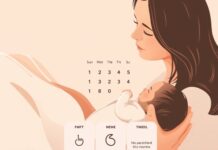




The lactational amenorrhea method (LAM) can serve as temporary birth control after birth—but only while all three conditions are true: your period has not returned, your baby is younger than six months, and you are fully or nearly fully breastfeeding. If any condition changes, breastfeeding alone is no longer a reliable contraceptive plan.
When The Lactational Amenorrhea Method Works
Frequent breastfeeding can suppress the hormones involved in ovulation. That effect is temporary and depends on the pattern of feeding as well as time since birth. The World Health Organization’s global family-planning handbook and U.S. guidance from the Centers for Disease Control and Prevention (CDC) describe LAM around the same three requirements:
- No menstrual period has returned. Bleeding immediately after birth is not the same as a returning period.
- Your baby is under six months old. LAM is not intended to protect beyond this point, even if you are still nursing often.
- You are fully or nearly fully breastfeeding, day and night. Feeding is frequent, with no long gaps. WHO guidance commonly describes gaps of no more than four hours during the day or six hours overnight.
When all three conditions are maintained, WHO describes LAM as about 98% effective during the first six months. That estimate is tied to meeting the conditions; it does not mean that breastfeeding in general offers similar protection. Local guidance may phrase “fully or nearly fully” differently, so if you are unsure whether your feeding pattern qualifies, ask a clinician or family-planning service.
Why Feeding Changes Matter
Introducing regular formula or solid feeds, reducing nursing sessions, or having longer gaps—especially overnight—can mean you no longer meet the breastfeeding condition. Pumping and feeding expressed milk may also make it harder to judge whether your pattern fits the guidance. If your routine is changing, don’t wait for your period to return before arranging another method.
Six months is a firm limit for LAM, not a prediction of when your fertility will return. Menstruation returning means LAM no longer applies, but you can ovulate before your first period. That is why waiting for a cycle to restart can leave you unprotected. If even one of the three conditions stops being true, treat LAM as ended and use another contraceptive method.
Plan Your Next Method Before LAM Ends
If you know you will reduce feeds or your baby is approaching six months, talk with a healthcare professional or family-planning service in advance. You can choose a method that fits your preferences and health circumstances; options and recommendations may differ by country. Ask when the method starts protecting you and whether you need a backup method in the meantime. Breastfeeding by itself is not dependable contraception once LAM’s conditions are no longer met.
If the change has already happened, seek advice promptly about starting contraception. If you had sex without another method after LAM stopped applying, ask a pharmacist or clinician promptly whether emergency contraception is appropriate. You can read more about emergency contraception while breastfeeding.
Choosing another method does not mean you have to stop breastfeeding. A clinician can help you compare options and timing based on your circumstances. This article offers general information, not individual medical advice; contact a healthcare professional if you are uncertain whether LAM still applies or which method is suitable for you.