

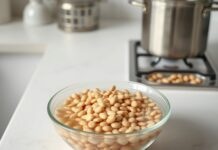



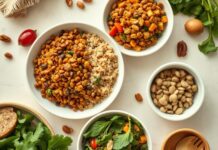












No. If you eat enough protein overall and include a variety of plant foods during the day, you generally do not need to combine complementary proteins at every meal. Plant based protein sources such as beans, lentils, tofu, nuts, seeds and whole grains can all contribute essential amino acids—the protein building blocks your body cannot make for itself.
How Plant Based Protein Sources Add Up
Different plant foods have different amino acid profiles. Legumes, for example, tend to provide more of the amino acid lysine, while grains tend to provide less. Grains and legumes can complement one another, as in beans with rice or hummus with bread. Those are useful combinations, but they do not have to appear together on your plate at every meal.
Your body uses amino acids from food over time, so the overall pattern of what you eat matters more than carefully matching foods at a single sitting. A varied day might include oats at breakfast, lentils at lunch and tofu with grains at dinner. You do not need to calculate amino acids or plan a specific pairing for each meal.
A 2019 review by François Mariotti, of AgroParisTech, INRA and Université Paris-Saclay in France, and Christopher D. Gardner, of Stanford University in California, examined research on adults following vegetarian and vegan diets in Western countries. The authors concluded that protein-rich foods such as legumes, nuts and seeds can provide adequate protein and that concerns about amino acid deficiencies have been overstated. The review drew on varied studies and dietary assessments; it was not a single controlled trial, and its conclusions do not mean every possible eating pattern provides enough protein.
What Protein Quality Means
Protein quality describes how well a food’s protein supplies essential amino acids in useful proportions and how readily those amino acids are digested and absorbed. Some scoring systems give many animal proteins higher scores than many plant proteins, though soy and some other plant foods can score well. These scores can help compare individual protein foods, but they do not say whether a whole diet is healthy or whether you must pair foods at each meal.
Quality matters most when your total protein intake is close to your needs: a less digestible protein or a limiting amino acid may then have more bearing on adequacy. If you are eating enough protein from varied sources, differences in scores are less likely to change the practical picture for a generally healthy adult. A score for one food also cannot capture the full mix of foods you eat across the day.
Start With Enough Protein, Then Build Variety
For many healthy adults, 0.8 grams of protein per kilogram of body weight per day (about 0.36 grams per pound) is a familiar minimum reference point. The World Health Organization’s reference is similar, at 0.83 g/kg per day. These figures are population guidelines, not personalized targets, and needs can vary. They are also different from a meal-by-meal amino acid rule.
Include protein-containing foods regularly: beans, chickpeas, peas, lentils, tofu, tempeh, nuts, seeds and whole grains are options. Soy foods provide a convenient protein-rich choice, but you do not have to eat soy to get protein from plants. Getting enough overall food matters too; a varied menu may not meet your protein needs if you routinely eat too little.
When You May Need More Tailored Planning
More careful planning may help if your diet is very restricted, you have a low appetite, or you are struggling to eat enough food. Needs can also differ for people doing intensive athletic training and for some older adults. Mariotti and Gardner noted that protein adequacy can be more complex in older adults; if you are over 60 and planning around muscle or health needs, see our guide to protein intake and meal timing after 60.
If you are pregnant or breastfeeding, have a medical condition that affects your diet, or are unsure whether your usual intake is adequate, ask a clinician or registered dietitian for individualized guidance. For most adults, though, there is no need to engineer a “complete” protein combination at every meal: focus on sufficient total protein and a mix of plant sources across your day.