

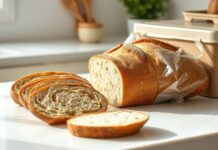


















How to store fresh bread depends on how soon you’ll eat it, the kind of loaf you have, and the warmth and humidity in your home. For most bread you’ll finish within a few days, store it at room temperature in a clean, dry place. Refrigeration can slow mold growth, but it also makes bread firm and stale faster. If you need to keep it longer, freezing sliced bread is usually the better compromise.
Why the fridge slows mold but speeds staling
Staling and spoilage are different. Staling is a change in texture and flavor: the crumb firms up and the crust can lose its crispness. It begins after baking as starch changes structure and moisture shifts within the loaf. Mold is microbial growth, often encouraged by warmth and moisture. Bread can be stale without being moldy, or moldy before it feels stale.
In a 2021 study, Thekla Alpers and colleagues compared household storage methods for two German bakery breads: pan wheat bread and a mixed rye-wheat sourdough. The loaves were bought in Freising, Germany, and monitored for 10 days. The researchers found that lower storage temperatures accelerated staling. Their results illustrate the trade-off: chilling may slow microbial growth, but a refrigerator is not the best place to preserve bread’s soft texture.
So, does bread last longer in the fridge? It may stay free of visible mold longer, but that does not mean it will taste or feel fresher. If mold is your main concern—especially in a hot, damp kitchen—refrigeration can be a reasonable short-term choice. For longer storage, freezing avoids the same everyday trade-off.
How to store fresh bread at room temperature
For bread you expect to eat soon, keep it in its original packaging if it is a packaged loaf, or use a clean bread bag or bread box for bakery bread. A box or bag helps limit drying; some airflow helps prevent excess moisture from building up. Keep bread away from direct sun, the oven, and other warm spots. Let freshly baked bread cool before wrapping it, so trapped steam does not create a damp environment.
Humidity changes the balance. In a dry room, bread can lose moisture and become hard; a bag or box helps slow that loss. In a warm, humid room, moisture can encourage mold, especially if bread is tightly sealed while still warm. Keep storage containers clean and dry, and check the loaf regularly. A bread box is not a humidity-control device, so it may not be enough to prevent mold in a persistently hot or damp kitchen.
Bread type matters, but it is not a mold guarantee
The German study included one mixed rye-wheat sourdough, but its findings do not establish that every sourdough loaf will keep longer. Sourdough fermentation has been reported to slow fungal growth in some bread, yet recipe, handling, packaging, and room conditions also matter. A sourdough crusty loaf may dry out more quickly in a sealed plastic bag than a soft packaged loaf. Follow the bakery’s storage advice when it is available.
Texture can also vary by recipe. In a study of whole-wheat pan bread, greater bran content was associated with faster firming. That result concerns staling in the breads tested; it does not mean whole-grain bread is unsafe sooner or predict how long a particular loaf will resist mold.
When freezing sliced bread is the better option
If you will not finish the loaf within a few days, freeze it while it is still fresh rather than waiting for it to go stale. Sliced bread lets you take out only what you need. Seal it well in a freezer-safe bag or airtight container to limit drying, and return the remaining slices promptly to the freezer. Toast slices straight from frozen, or thaw only the amount you plan to use.
In a warm or humid climate, freezing portions you will not eat soon can be more useful than keeping the whole loaf on the counter or in the fridge. Keep a small amount at room temperature for immediate use, and freeze the rest. If you choose the refrigerator to reduce the chance of mold, seal the bread and expect its texture to change more quickly.
If you see mold, discard the whole loaf rather than cutting away the visible patch: bread is porous, and growth may extend beyond what you can see. When in doubt about a loaf’s safety, do not eat it.