

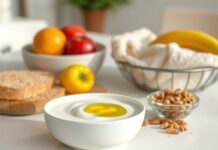
















If you are comparing foods to lower LDL, products fortified with plant sterols or stanols can make a measurable difference to your cholesterol test. A daily amount of about 1.5–2.4 grams (1,500–2,400 milligrams) typically lowers LDL cholesterol by around 7–10%. The effect usually appears within two to three weeks, but it is a change in a risk marker—not proof that the food prevents heart attacks or strokes.
How foods to lower LDL work
Sterols and stanols are plant compounds that resemble cholesterol. In the intestine, they reduce how much cholesterol is absorbed. Ordinary foods such as nuts, grains, vegetables and oils contain them, but usually not in amounts high enough to produce the LDL reduction seen in studies. Fortified spreads, yogurts, milk and some other products provide a concentrated dose. Check the label: the amount per serving varies, and reaching the studied daily intake may take more than one serving.
The European Food Safety Authority concluded that 1.5–2.4 grams a day can lower blood cholesterol by an average of 7–10%, with the effect generally established within two to three weeks. Studies lasting as long as 85 weeks found that the reduction could be maintained while people continued consuming the products. In other words, this is a daily dietary addition, not a one-time course; LDL can rise toward its earlier level after use stops. The best-supported products include spreads and dairy-style foods, taken as directed on the package.
Lower LDL is not the same as proven heart protection
High LDL is an established cardiovascular risk factor, and lowering it is an important treatment goal. But the evidence for fortified foods does not establish that these products themselves prevent heart attacks or strokes. Trials showing lower LDL have mainly measured cholesterol, rather than enough cardiovascular events to test prevention directly.
A 2017 modeling study by Wei Yang and colleagues at the University of Surrey and other UK institutions projected cardiovascular events for adults aged 45 and older in England who had elevated cholesterol but no previous cardiovascular disease. The model estimated that daily fortified spread could avert some events over 20 years, assuming people kept using it. Those were projections based on risk estimates and assumptions—not observed outcomes in a trial—so they cannot confirm that eating the spread prevents events. The analysis also describes an English population and healthcare context, not a result that can automatically be applied to every country.
Where these products may fit in treatment
You might discuss a fortified food with a clinician or dietitian if your LDL is elevated and you want an additional dietary measure alongside broader heart-healthy eating or prescribed treatment. A meta-analysis of 15 randomized trials involving 500 people taking statins found that adding sterol- or stanol-enriched foods lowered LDL by a further 0.30 mmol/L (about 12 mg/dL) on average compared with statins alone. That supports an additional effect on cholesterol; it does not show that the combination prevents events.
These foods should not replace a prescribed cholesterol medicine or delay a review of your treatment plan. Their effect is modest compared with some medicines, and whether it matters for you depends on your LDL level and overall cardiovascular risk. For more on that distinction, see why plant sterol foods do not replace prescribed treatment. Continue any medicine as directed, and ask your clinician before making treatment changes.
One important exception: sitosterolaemia
People with sitosterolaemia, a rare inherited condition affecting the body’s handling of plant sterols, should avoid sterol- and stanol-fortified foods. These products are designed to increase dietary intake of compounds that people with this condition need to manage carefully. If you have sitosterolaemia, check with your specialist about foods and supplements; do not assume a product is suitable because it is plant-based.
For most other people, research on standard daily amounts supports a short-term LDL-lowering effect, not a guaranteed health outcome. Product availability and labeling differ by country, so check how much sterol or stanol a serving contains. If you have high LDL or a cardiovascular condition, a healthcare professional can help you decide whether the food fits alongside your other care.