


















If you searched “potatoes kidney disease,” the key question is often whether cooking can make potatoes and other vegetables lower in potassium. It can: potassium moves into boiling water, and draining that water removes some of it. The size of the reduction depends on the food and how it is prepared, and boiling also removes some other minerals.
Potatoes Kidney Disease: What Boiling Can Change
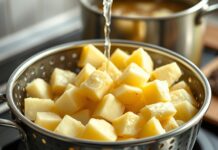
Potatoes have been tested directly. In a 2008 food-science study, P. C. Bethke and S. H. Jansky measured potassium and other minerals in potato tubers after different preparation methods. Boiling potato cubes lowered potassium by 50%; boiling shredded potato lowered it by 75%. Leaching alone did not significantly reduce potassium, and adding a leaching step before boiling did not reduce it more than boiling alone.
Those results support a simple distinction: soaking is not the same as boiling, and cutting the potato into smaller pieces can increase potassium loss during boiling. The figures apply to the potato preparations studied; they are not a guaranteed reduction for every variety, portion or home-cooking method. For more detail on preparation, see our guide to how boiling and soaking affect potato potassium.
A 2022 study by Costanza Ceccanti and colleagues tested a range of plant foods and cooking methods, then used simulated digestion in a laboratory to assess how much potassium might become available. Boiling lowered potassium in most of the vegetables they tested, but not carrots, zucchini or cauliflower. Starting potatoes, peas and beans in cold water led to greater potassium reductions than the other boiling approach they tested. This was a food and laboratory study, not a test of blood potassium or health outcomes in people.
Discard The Water, And Know The Trade-Off
Potassium that leaches into the cooking water is still in the water. If you use it in soup, gravy or sauce, you may bring some of that potassium back into the meal. When the aim is to reduce potassium in the serving, drain the vegetables and discard the water.
Boiling can also reduce other minerals. In the potato study, researchers recorded reductions in phosphorus, magnesium, sulfur, zinc, manganese and iron as well as potassium. The research did not establish how much of each mineral a person would absorb from a meal, but it does show that boiling is not a potassium-only adjustment.
That trade-off matters because vegetables contribute more than potassium to a diet. If you have been advised to lower potassium, ask your kidney dietitian which foods and portions to focus on, rather than removing vegetables across the board. The studies measured changes in food; they did not show that a particular boiling method prevents high blood potassium or improves kidney outcomes.
When A Lower-Potassium Method May Help
Boiling and draining can be a useful preparation option when your kidney team has recommended reducing dietary potassium. It may let you keep some foods in your meals while lowering the potassium in a portion. For potatoes, the findings point to boiling small pieces rather than relying on soaking alone. For other vegetables, the effect is less predictable, so don’t assume the same reduction applies to every food.
Kidney disease by itself does not mean everyone needs a potassium-restricted diet. Whether to change your intake depends on your individual clinical picture, including blood potassium results and other factors your care team considers. Guidance can differ between people with kidney disease, and strict restriction is not automatically appropriate. Some clinical guidance favors adjusting intake to help keep blood potassium in range, while also recognizing that strong evidence for intensive dietary restriction is limited.
If you have been told to limit potassium, confirm the target and cooking approach with your clinician or renal dietitian—especially if you are considering a major change to your diet. They can help you balance potassium goals with overall nutrition and identify whether boiling, portion changes or another adjustment fits your situation.