











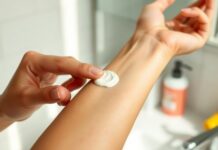


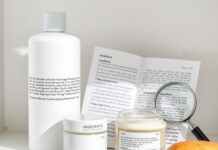






How to patch test skincare at home: apply a small amount of the product to a discreet patch of skin, following its label directions, and repeat the test over several days. This can help reveal irritation or a delayed reaction before you use the product more widely. A clear result is only a limited screen: it cannot rule out an allergy or guarantee the product will suit your face.
How To Patch-Test Skincare At Home
Choose a small, healthy area of skin that is easy to check, such as the inner forearm. Use the product as its instructions intend: a rinse-off cleanser should be rinsed off, while a leave-on cream should be left on as directed. Apply a small amount to the same area repeatedly over several days, unless the label gives different directions. Don’t cover the test spot unless the product instructions tell you to.
Keep the rest of your routine steady while you test, and avoid putting other new products on that patch. That makes it easier to notice a reaction and connect it to the product. Check the area each time before reapplying. Stop using the product on the test spot if you develop persistent redness, itching, swelling, bumps, or a rash; don’t continue applying it just to complete the test.
There is no single home schedule that suits every formula or person. A small-area test also isn’t a substitute for following warnings on the packaging. If the product is intended for use around the eyes, on broken skin, or under particular conditions, follow its instructions and ask a clinician if you are unsure. For an at-home peel, read how to reduce the risk of burns and skin damage before trying it.
What A Home Test Can—and Can’t—Show
A repeat-use check gives you a chance to notice how one small area responds under those particular conditions. It may reveal an irritant reaction, which can happen when a product bothers the skin, or a delayed allergic contact reaction. Allergic contact dermatitis is an immune response that can develop after a person has become sensitized to an ingredient; a reaction may take time to appear after exposure.
But a home test cannot reliably tell irritation from allergy. Both can cause redness or a rash, and how the skin looks is not enough to identify the cause. A negative result also has limits: it reflects a small patch of skin, a particular amount and pattern of use, and a short period of observation. Your face may respond differently, and a reaction may emerge with more frequent or longer use. Sensitization can also develop after exposure, so a product that caused no early reaction is not guaranteed to remain trouble-free.
In other words, a clear test is reassuring only in a narrow sense: you did not notice a reaction at that test site during that test. It does not prove that the product is hypoallergenic, establish that every ingredient is safe for you, or predict how it will perform on your face.
When Dermatologist Patch Testing Makes More Sense
If you repeatedly develop an itchy or persistent rash from skincare, or you cannot work out which product or ingredient is responsible, talk with a dermatologist or another clinician experienced in contact dermatitis. Seek advice especially if the reaction is severe, involves the face or eyes, or does not settle after you stop the suspected product. A clinician can assess the pattern and decide whether diagnostic testing is appropriate.
Clinical patch testing is different from a home spot check. A trained professional applies selected, standardized allergens to the skin and assesses the reactions at scheduled readings. The European Society of Contact Dermatitis’ 2026 guideline describes patch testing as a diagnostic process for suspected contact allergy, with results interpreted alongside a person’s history and exposures. The choice of substances matters: testing may include a baseline series and, when appropriate, ingredients or products relevant to your own exposure.
That makes dermatologist-led testing more useful when the question is “What am I reacting to?” rather than simply “Does this product bother this spot?” It can help identify a relevant contact allergy, but it is not a guarantee that every possible ingredient or reaction will be detected. Bring product packaging or ingredient lists to your appointment if you can; they may help the clinician decide what to assess.