


















If you’re concerned about tirzepatide muscle loss, the key distinction is that a drop in measured lean mass does not automatically mean you have lost the same amount of working muscle or strength. Weight loss with GLP-1 medicines can include lean tissue as well as fat. Eating enough nourishing food and doing resistance exercise are sensible ways to support muscle, but no protein target has been established for everyone taking these medicines.
What tirzepatide muscle loss means in trials
In a 2025 body-composition substudy of the international SURMOUNT-1 trial, Michelle Look, Julia P. Dunn and colleagues used DXA scans to measure fat and lean mass in 160 adults with overweight or obesity. The substudy included participants from trial sites in Argentina, Brazil, Mexico, Puerto Rico, Taiwan and the United States. After 72 weeks, the tirzepatide group had lost an average of 21.3% of body weight, 33.9% of fat mass and 10.9% of lean mass. About 75% of the weight lost was fat and 25% lean mass.
That ratio is useful context, not a direct measure of skeletal muscle. DXA “lean mass” includes tissues other than muscle, and the substudy did not measure strength or physical performance. Participants received lifestyle counseling and were encouraged to increase activity, but they were not assigned a specific resistance-training program. So the results describe body-composition changes; they do not show whether a particular exercise or protein plan prevents them.
A different picture comes from SEMALEAN, a prospective study led by Mathieu Alissou and colleagues at the Nutrition Department of Rouen University Hospital in France. Among 106 adults with severe obesity who completed a year of semaglutide treatment, DXA-measured lean mass fell early and then stabilized, while handgrip strength improved on average. The study had no comparison group, and its participants had grade 3 obesity, so the findings cannot establish that semaglutide caused the strength improvement or predict what will happen for every patient.
Together, these studies show why “lean mass loss” and “muscle loss” should not be treated as identical. They also do not prove that muscle is unaffected: changes in strength and function matter, and not every study measures them.
Protein and food quality matter when appetite is low
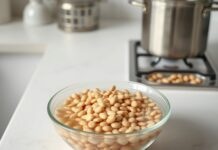
GLP-1 medicines can reduce appetite, and treatment-related nausea or other digestive symptoms may make it harder to eat enough. That can leave less room for protein and other nutrients. Protein-rich foods—such as eggs, yogurt, fish, tofu, beans or lentils—can help you include protein in meals, but there is no single GLP-1-specific intake target shown to suit everyone. Recommendations often draw on research in other weight-loss settings, older adults or people at risk of muscle loss rather than trials that establish one dose for all GLP-1 users.
Your needs and what you can comfortably eat may differ with your health, age, usual diet and treatment experience. A clinician or dietitian can help you review whether your overall intake is adequate and whether a supplement is useful when food alone is difficult. If you’re over 60, this guide to protein guidance for older adults offers additional context, but it is not a GLP-1-specific prescription.
Resistance exercise is a reasonable support, not a guarantee
Resistance training is widely used to help maintain muscle and bone during weight loss. Guidance on GLP-1 nutrition also pairs adequate protein with resistance exercise. But direct trials testing specific resistance-training plans alongside these medicines remain limited, so it is not possible to promise that exercise will prevent lean-mass changes.
If you are new to strength work, have mobility limitations or are managing a health condition, ask your healthcare team what kind of activity is appropriate for you. The useful aim is to include regular resistance work that you can sustain, rather than treating exercise as a way to cancel out a scan result.
Look beyond the number on a body-composition scan
Scans can help describe changes in body composition, but they do not by themselves tell you whether your strength, mobility or nutritional status is worsening. Pay attention to how you are functioning and whether low appetite or side effects are making it difficult to eat a varied diet. Persistent difficulty eating, marked weakness or concerns about your intake are reasons to speak with your prescriber or a dietitian. They can help assess your situation and decide whether nutrition support or closer monitoring is appropriate.