
















Brief movement breaks during prolonged sitting can improve post-meal glucose and insulin responses in short-term studies. Walking breaks appear particularly helpful, but research has not established one ideal interval for everyone, and it has not shown that desk breaks prevent long-term disease.
What Prolonged Sitting Breaks Can Change
A 2026 systematic review and meta-analysis by Jennifer T. Gale, Hannah Martin, Jillian J. Haszard and Meredith C. Peddie combined 53 acute laboratory studies; 39 contributed to the meta-analysis. The studies used randomized crossover designs, in which adults tried both uninterrupted sitting and sitting interrupted by brief activity. Participants included people with a range of health and weight statuses.
Compared with uninterrupted sitting, breaks reduced the rise in glucose and insulin measured after meals. Walking had the strongest average effects among the activity types assessed. Breaks every 15–20 minutes showed the largest reductions in the review’s frequency analysis. These are short-term changes in measured markers—not proof that a particular schedule prevents diabetes or heart disease.
The review’s experiments lasted less than a day and took place in laboratories. They help show what can happen to post-meal metabolism during a controlled sitting session, but do not establish whether the same effects persist through ordinary workdays or reduce illness years later.
How Often Should You Move?
A separate 2024 meta-analysis by Mingyue Yin and colleagues compared more frequent breaks (no more than 30 minutes of sitting between breaks) with less frequent breaks. Across 13 randomized crossover studies involving 211 participants, the more frequent protocols reduced glucose more, on average. The researchers found no clear difference between the schedules for blood pressure, insulin or several other measured outcomes. They rated the evidence for all outcomes as low certainty.
The two reviews point in a similar direction: interrupting sitting more often may help glucose control. But their findings do not establish a single prescription. The studies tested different activities, schedules and populations, and the 2024 comparison was small. A schedule that fits one person’s work and mobility may not fit another’s.
Blood-pressure findings are less settled than glucose findings. In the frequency comparison, more frequent breaks did not clearly outperform less frequent ones for blood pressure. A 2024 scoping review of vascular studies described possible benefits, but also noted that differences in study methods and limited research make firm conclusions difficult.
What A Longer Workplace Trial Adds
A 12-week randomized trial in Nanchang, China, offers a useful, though still limited, step beyond laboratory sessions. It enrolled 86 sedentary office workers aged 25–55. The intervention group took three-minute micro-exercise breaks each work hour; the comparison group continued usual behaviour. Of the participants, 79 completed the 12-week assessment. The researchers reported better fasting and post-meal glucose, insulin-resistance measures and systolic blood pressure in the break group at the end of the trial.
This workplace study suggests that short breaks can be workable over several months and may affect more than immediate post-meal readings. But it involved a small group of office workers in one Chinese city, and it measured health markers—not new cases of disease or long-term health outcomes. Its results cannot establish the same effects for every occupation or population.
A Routine You Can Adapt
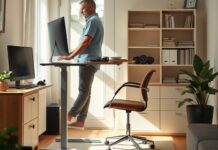
If you work at a desk, try treating movement breaks as a practical interruption to long, uninterrupted stretches—not as a rigid medical target. For example, you could stand and walk for a few minutes about every 30–60 minutes, or take a short walk after a meal when your schedule allows. This is a reasonable starting routine, not a proven best interval. If frequent breaks are difficult, build them around natural pauses such as finishing a call or getting a drink.
Walking is a sensible option when it is comfortable: it produced the strongest average glucose and insulin effects in the 2026 review. Standing also changes posture, but the findings do not show that standing still produces the same effects as walking. For more on how often to break up sitting at work, see our related guide.
Movement breaks complement regular exercise; they do not replace it. The studies discussed here do not show that brief desk breaks alone meet broader physical-activity needs or guarantee protection from disease. If a health condition or mobility limitation affects what movement is safe for you, ask a clinician for guidance.