











If you are wondering about soy and tamoxifen, human studies offer reassurance about ordinary soy foods: they have not shown that eating tofu, tempeh, edamame or soy milk worsens breast cancer outcomes or cancels out hormone therapy. Some studies link soy intake after diagnosis with fewer recurrences, but they cannot prove soy caused that difference. Concentrated isoflavone supplements are a separate question, with much less long-term outcome evidence.
What Human Studies Say About Soy And Breast Cancer Recurrence
A large prospective analysis by Sarah Nechuta and colleagues combined data from 9,514 breast cancer survivors in two US cohorts and one Chinese cohort. The women had invasive breast cancer diagnosed between 1991 and 2006. Researchers estimated postdiagnosis soy-isoflavone intake using food questionnaires and tracked outcomes over an average of 7.4 years. Intake of at least 10 milligrams a day was associated with a lower risk of recurrence. The association with breast cancer-specific and overall mortality was also lower, but those results were not statistically conclusive.
Because this was observational research, it cannot establish that soy itself prevented recurrence. People who eat more soy may differ in other ways, and questionnaires cannot measure diet perfectly. Still, the study included women in both the United States and China, where usual soy intakes differed, and the recurrence association appeared in both groups. That makes it relevant beyond populations with traditionally high soy consumption, though it does not prove the same effect for every person or dietary pattern.
A 2023 systematic review and meta-analysis by van Die and colleagues likewise found that soy isoflavone intake was associated with lower recurrence in observational studies. The authors emphasized an important gap: these studies do not establish whether starting soy after diagnosis has the same relationship with outcomes as continuing a habit begun earlier. No long-term randomized trial has tested whether postdiagnosis soy foods change recurrence or survival.
Why Whole Soy Foods Are Not The Same As Supplements
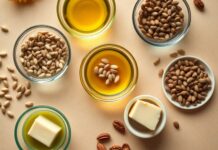
Foods such as tofu, tempeh, edamame and soy milk provide protein and isoflavones as part of a meal. A supplement can deliver concentrated isoflavones without the rest of the food, and products may vary in dose. Evidence about eating soy foods therefore should not be treated as proof that high-dose capsules are safe or beneficial.
Mark Messina and Sarah Nechuta’s 2025 review concluded that postdiagnosis soy foods appear safe and may be associated with lower recurrence and possibly mortality. It also noted that clinical research has not found effects on measures such as breast-cell proliferation, but that is not the same as a trial showing supplements improve survival. The review discusses up to two traditional Asian servings daily, providing about 50 milligrams of isoflavones, as a reasonable range because relatively few population studies included higher intakes—not because 50 milligrams is a proven safety limit.
For most readers, the useful distinction is simple: evidence about regular foods is more reassuring than evidence about concentrated isoflavone supplements. Do not assume a supplement is an equivalent way to get the possible benefits reported for food.
Soy And Tamoxifen Or Aromatase Inhibitors
Observational studies have not shown that soy foods reduce the effectiveness of tamoxifen. The 2025 review also found no clear signal of interference with tamoxifen or aromatase inhibitors, although the treatment-interaction evidence is limited and does not rule out every possible effect. Soy foods should not replace or change prescribed endocrine treatment.
Guidance differs by country and organization. Some cancer-nutrition guidance allows moderate soy foods during treatment, while older or more cautious advice—particularly in parts of Europe—has warned against soy for people taking tamoxifen or aromatase inhibitors. The research does not support treating that warning as settled proof that ordinary soy foods interfere with treatment; equally, it cannot settle every question about high-dose supplements.
If you are considering an isoflavone supplement, or your care team has given you a specific restriction, ask your oncologist or oncology dietitian before changing your intake. For more on food choices during treatment, see guidance on eating soy during breast cancer treatment.
A Practical Takeaway
You generally do not need to avoid ordinary soy foods solely because you have had breast cancer or take tamoxifen or an aromatase inhibitor. Human evidence is reassuring, and some observational findings suggest a possible benefit, but soy has not been proven to prevent recurrence. Keep food and supplements distinct, and get individualized guidance before using concentrated isoflavones, especially while receiving treatment.