

















How to wash quinoa is simple: if the package does not say the grains are prewashed or ready to cook, rinse them briefly in a fine-mesh sieve under cool running water. Rinsing can help remove surface saponins, which may make quinoa taste bitter or soapy. But it is usually a flavor preference—not a proven way to make quinoa safer or substantially more nutritious.
Why Quinoa Can Taste Bitter
Saponins are natural compounds concentrated in quinoa’s outer layers. They have a bitter taste, and their detergent-like qualities can create foam when they meet water. The amount varies among quinoa varieties and products, so one bag may taste fine without extra rinsing while another benefits from it.
Food-processing research shows that washing can reduce saponins and bitterness. That does not mean a quick rinse removes every saponin: some studies tested repeated or prolonged washing, and commercial processing can involve mechanical polishing as well as washing. At home, the goal is usually to improve the flavor, not to reproduce an industrial treatment.
When A Rinse May Help
Check the package first. Many products have already been washed, polished, or otherwise processed to reduce surface saponins. Look for wording such as “prewashed,” “pre-rinsed,” or “ready to cook.” If the instructions say to rinse, follow them; if they say the quinoa is ready to cook, an additional rinse is generally optional.
If there is no guidance, or you have noticed a bitter aftertaste with that product, rinsing is a reasonable preparation step. It can also wash away loose dust or small particles. You do not need to rinse quinoa solely because it is quinoa.
How To Wash Quinoa Without Losing The Grains
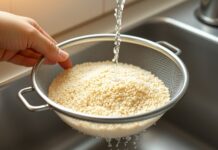
- Use a fine-mesh sieve. Quinoa grains are small and can slip through a regular colander.
- Rinse under cool running water. Move the grains gently with your fingers for about 30 seconds, then let them drain well. If the water foams, that can be from the saponins; it is not a sign that the quinoa is spoiled.
- Cook according to the package or recipe. A rinse leaves the grains wet, so drain them thoroughly and use the cooking directions for your product.
No fine sieve? Put the quinoa in a bowl, cover it with water, swish it gently, and carefully pour off the water while holding the grains back with your hand. Repeat if you want, taking care not to pour the small seeds down the drain. This is less convenient than a fine-mesh sieve, but it works for a small batch.
Is Rinsing Better For Nutrition Or Safety?
Rinsing is mainly about taste and preparation. It has not been established as a household food-safety step, and there is no good basis for expecting a brief rinse to make quinoa substantially more nutritious.
One controlled study optimized a much more intensive wash for quinoa seeds: it tested water temperature, volume, and treatment time, including treatments lasting about an hour. The process removed most measured saponins; protein and some minerals were unchanged, while some other minerals decreased slightly in certain quinoa varieties. Those results describe that specific processing method and samples—not the nutritional effect of a short rinse at your kitchen sink. A brief rinse may remove a little surface material, but the study cannot tell us that it meaningfully improves or harms the nutrition of ordinary home-cooked quinoa.
Let The Package And Your Taste Decide
If your quinoa is labeled prewashed and tastes good, you can usually skip the extra step. If the package calls for rinsing, or the cooked quinoa tastes bitter, rinse it before cooking. Either way, rinsing is a small preparation choice—not a guarantee of greater safety or nutritional value.