











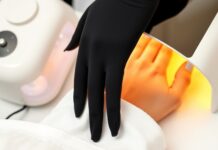






A gel manicure uv lamp exposes the skin on your hands to ultraviolet light, mainly UVA—even if it uses LED bulbs. Research has found reasons to take that exposure seriously, but it has not established that typical gel manicures cause skin cancer. If you choose to have them, sunscreen or UV-protective fingerless gloves can reduce how much UV reaches the backs of your hands.
What a gel manicure UV lamp exposes your hands to
The lamp cures gel polish by shining light onto your fingertips. Both traditional fluorescent-style nail lamps and LED nail lamps can emit UVA, the ultraviolet wavelengths between 320 and 400 nanometres (nm). Some devices may emit small amounts of UVB as well. “LED” describes the light source; it does not mean the lamp is UV-free.
Exposure during a manicure is brief compared with many forms of repeated UV exposure, but it can add up if you have regular appointments. A typical treatment involves several minutes under the lamp, and manicures may be repeated every two or three weeks. The exact dose depends on the device, how long you use it and how often. Lamps vary, so you can’t judge exposure by brand, price or whether a device is labelled “LED.”
What research says about gel manicure cancer risk
In a 2021 descriptive study, Helen Ford, Caitlin Horsham and colleagues measured eight home nail-curing devices sold in Australia. They found UVA from every lamp, with measured intensity varying substantially between devices. For the typical short use examined, the researchers calculated a low UV dose, but said the long-term effect of repeated exposure to the hands remained unknown. The results describe those eight Australian-market devices, not every lamp used in salons or at home worldwide.
A February 2025 scoping review by Dmitry Beylin, Rachel Kornhaber and colleagues brought together 17 articles: 12 studies and five case reports published in English through January 2024. Some laboratory studies found DNA damage in cells exposed to nail-lamp radiation. Case reports described skin cancers or precancerous changes on the hands of people with extensive exposure. Those findings raise a plausible concern, but cell experiments do not show what happens to a person over time, and case reports cannot prove that a lamp caused a cancer. The review concluded that a direct causal link has not been established and that evidence on risk from usual use remains limited.
So, the research does not support saying that a gel manicure will cause skin cancer, nor can it confirm that repeated use has no risk. If you get frequent manicures, reducing unnecessary exposure is a reasonable precaution—not proof that you need to stop. A separate issue is allergy to gel ingredients: learn about gel polish allergy symptoms and prevention.
Ways to reduce UV exposure during a manicure
- Apply broad-spectrum sunscreen to the backs of your hands. The FDA suggests sunscreen as a protective measure for nail-lamp use. One laboratory study also found higher skin-cell viability when cells were exposed to a nail lamp with SPF 50 cream than without it; that cell result is not a measure of cancer prevention in people. A 2024 paper discussing safety information recommends applying sunscreen at least 30 minutes before treatment.
- Consider UV-protective fingerless gloves. Choose gloves designed to block UV and leave the nails exposed, so the polish can still be cured. They protect the covered skin, not the fingertips or nail area.
- Follow the lamp and polish instructions. Use the specified curing time rather than adding extra exposure. Longer is not automatically better, and products and lamps differ.
- Ask about the lamp and your own sensitivities. In the United States, FDA guidance advises healthy users not to exceed 10 minutes per hand per session and recommends restrictive use for people who are sun-sensitive. A 2021 Australian study noted that Australia had no specific guidance for cosmetic nail-curing devices at that time. Rules and guidance can differ by country, so check current local advice if you are concerned.
These steps can reduce UV reaching exposed skin; they cannot make exposure zero or guarantee prevention. If you are especially sun-sensitive, take medicines that increase light sensitivity, or have a personal concern about skin changes, ask a clinician what precautions make sense for you.