















When you’re choosing fragrance free skincare, “fragrance-free” is usually a more useful claim than “unscented”—but neither guarantees the product will suit your skin. Check the ingredient list as well as the front label, especially if you’re trying to avoid a specific fragrance ingredient.
Fragrance-Free And Unscented Are Different Claims
“Unscented” generally means a product has no noticeable smell. It may still contain fragrance ingredients used to mask the natural odour of other ingredients. A fragrance-free product, by contrast, should not have added fragrance ingredients, according to US Food and Drug Administration (FDA) guidance. It may still have a scent from ingredients added for other purposes.
In the US, there is no federal standard definition for claims such as “fragrance-free” or “for sensitive skin.” FDA guidance says cosmetic labels must not be false or misleading, but the claim alone is not proof that a product contains no ingredient you might react to.
How Fragrance Ingredients Appear On Labels
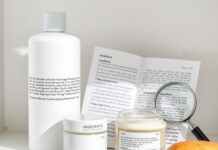
Look for terms such as “fragrance,” “parfum” or “perfume.” In the US, a cosmetic ingredient list may use the general term “fragrance” rather than naming every component of a fragrance blend. That can make it difficult to tell whether a particular fragrance substance is present. If you need to avoid a specific ingredient and the label doesn’t answer your question, contact the manufacturer.
Essential oils are not automatically fragrance-free just because they come from plants. Oils such as lavender or citrus may contribute scent and can contain fragrance substances. They may appear under a botanical ingredient name, so a label without the word “fragrance” is not necessarily enough to establish that a product has no scented ingredients.
Some fragrance substances can cause allergic reactions or irritation in some people. This does not mean fragrance ingredients affect everyone, or that a plant-derived ingredient is inherently gentler. If you have a known allergy, look for that ingredient by name where it is disclosed rather than relying only on a broad marketing claim.
What Ingredient Rules Mean In The US, UK, EU And Australia
US: Retail cosmetics generally need an ingredient list, but fragrance ingredients may be grouped under “fragrance” or “flavor.” FDA does not have the same authority to require cosmetic allergen labelling as it does for food. A US label may therefore give you less detail about a fragrance blend than you want.
EU: Ingredient lists may identify a fragrance blend as “parfum” or “aroma,” while certain regulated fragrance allergens must also be named individually when they exceed applicable concentration thresholds. The EU has expanded its list of substances subject to this disclosure. This provides more information for some ingredients, but it does not mean every component of a fragrance blend will appear separately.
UK: Great Britain and Northern Ireland do not necessarily follow identical cosmetics rules: Northern Ireland follows relevant EU rules, while Great Britain has its own regulatory framework. Ingredient lists and fragrance-allergen disclosures may not match across these markets, so check the label for the product sold where you live.
Australia: Cosmetics require ingredient information, but Australia does not use the EU’s same fragrance-allergen disclosure system. A fragrance blend may be identified as “fragrance” rather than listing each component individually. If a particular ingredient matters to you, ask the company for clarification.
Across regions, the key difference is how much detail you can expect about a fragrance mixture. A product sold in several countries may have different packaging or ingredient declarations. Don’t assume that a label that provides detail in one market tells you everything about the product in another.
Choosing Fragrance-Free Skincare For Sensitive Skin
Start with the ingredient list, not just a “sensitive skin” or “fragrance-free” badge. Check for ingredients you already know you need to avoid, including essential oils or named fragrance substances. If the list uses a broad term and you need more detail, ask the manufacturer before buying.
Fragrance-free products can still contain other ingredients that irritate your skin or trigger an allergy. The label claim cannot predict how an individual will respond. If you develop a rash or other reaction, stop using the product and speak with a healthcare professional; they can help assess the cause and whether allergy testing is appropriate.