





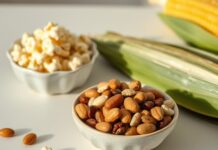











If you have diverticulosis, you generally do not need to avoid nuts, seeds, popcorn, or corn to prevent diverticulitis. The idea that these are foods that cause diverticulitis by lodging in diverticula and triggering inflammation has not held up in research. But prevention advice is not the same as what to eat during an acute episode: studies of long-term risk do not establish a diet for treating a flare.
What The Evidence Says About Foods That Cause Diverticulitis
Diverticulosis means you have small pouches, or diverticula, in the colon. Diverticulitis is inflammation involving those pouches. Having diverticulosis does not mean you will develop diverticulitis, and the old particle-trapping theory is not a good reason on its own to cut nutritious foods from your diet.
A large US study, the Health Professionals Follow-up Study, followed 47,228 men aged 40 to 75 who had no known diverticular disease at the start. From 1986 to 2004, researchers tracked reported diets and new diagnoses. Men who ate nuts or popcorn more often did not have higher diverticulitis rates. The highest nut intake was linked to a lower rate, but the confidence interval included no difference, so that result does not establish that nuts prevent the condition. Popcorn showed a lower rate in the highest-intake group. Corn was not associated with diverticulitis, and none of the three foods was associated with diverticular bleeding.
Because that study included men without known disease, it cannot tell us exactly what happens for every person already living with diverticulosis—or prove that these foods protect against a first episode. A later prospective study adds evidence from women. Trevor Barlowe and colleagues studied 29,916 women enrolled in the US and Puerto Rico-based Sister Study. Over 415,103 person-years, they identified 1,531 new diverticulitis cases. Reported intake of peanuts, nuts, and seeds was not associated with risk. The study grouped those foods together, so it cannot determine whether one particular nut or seed has a different effect.
A 2025 systematic review by Constantinos Voniatis, Timea Csupor, and Attila Szijártó combined nine observational studies, covering more than two million person-years. It found no increased diverticulitis risk associated with nut intake. As with the individual studies, these observational findings can show associations, not prove that eating or avoiding a food causes a particular outcome.
What Guidelines Recommend For Prevention
Guidance has moved away from blanket restrictions. The 2026 American College of Gastroenterology guideline says people with a history of diverticulitis can follow a healthy diet without avoiding nuts, seeds, corn, or popcorn. It also points to physical activity, maintaining a healthy weight, avoiding smoking and heavy alcohol use, and limiting nonsteroidal anti-inflammatory drugs when possible as measures that may help reduce recurrence risk.
A 2022 guideline from German gastroenterology and surgical societies likewise advises against avoiding nuts, grains, corn, or popcorn for primary prevention. It recommends a high-fibre diet of at least 30 g per day, rich in fruit, vegetables, and cereals. That specific target comes from the German guideline; follow local dietary guidance and seek individual advice if you have health conditions or dietary needs that affect fibre intake.
Together, the findings support keeping these foods in your usual diet if you tolerate them. They do not show that nuts, seeds, popcorn, or corn are required for prevention, or that a particular food pattern can guarantee you will not have an episode. For general prevention, a healthy overall eating pattern is more relevant than singling out these foods.
During An Acute Flare, Ask About Your Situation
Long-term prevention studies do not test what you should eat while you have active diverticulitis. So the conclusion “you do not need to avoid popcorn to prevent an episode” is not the same as “eat anything during a flare.” Your clinician may give temporary eating or drinking instructions as part of your care; ask when and how to return to your usual diet. Do not rely on avoiding nuts or seeds to treat new or worsening symptoms.
Diverticulitis needs clinical assessment. The American College of Gastroenterology guideline notes that CT imaging is important to confirm a first presentation and in severe cases. If you have concerning abdominal symptoms, contact a healthcare professional rather than trying to manage them through food exclusions alone.
The Bottom Line
If you have diverticulosis or have recovered from diverticulitis, current research and guidelines do not support routinely avoiding nuts, seeds, popcorn, or corn for prevention. Keep the distinction clear: that long-term advice does not settle what to eat during an acute flare, when your clinician’s guidance should take precedence.