















Mercury for skin lightening can be hidden in creams marketed for brightening, acne, age spots or anti-ageing—and some products omit it from the label. If a cream has no reliable ingredient list, a handmade label or an unclear seller, stop using it. A label can offer clues, but it cannot confirm what is in the jar.
Where Mercury for Skin Lightening Can Hide
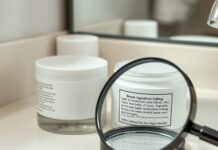
Check the ingredient list for mercury, mercurio, mercuric, mercurous chloride, calomel or Hg. These names refer to mercury or mercury compounds. Don’t use a product that lists them.
Missing or incomplete information is also a warning. The U.S. Food and Drug Administration (FDA) cautions against products with no label, handmade labels, or labels that don’t provide required information in English. Some creams are sold online or through informal channels, and products marketed as acne treatments or anti-ageing creams may also contain mercury. So a product doesn’t have to say “whitening” to deserve scrutiny.
Even a complete label is not a guarantee. In a 2022 systematic review, Ashley Bastiansz, Jessica Ewald, Verónica Rodríguez Saldaña, Andrea Santa-Rios and Niladri Basu brought together 41 papers covering 22 countries and product samples collected between 2000 and 2022. Mercury levels varied widely: some sampled products exceeded the international limit, while the pooled median was below it. That median describes the group of samples, not the contents of any particular cream.
Why Repeated Use Matters
Mercury can be absorbed through skin. With continued exposure, it may build up in the body and harm the kidneys, nervous system, skin and other organs. Pregnant people, nursing babies and young children are of particular concern. Exposure may also reach other household members through contaminated towels or surfaces, or mercury vapour.
A 2010 investigation by California and Virginia public health departments illustrates how exposure can extend beyond the person applying a cream. In five households, investigators examined 22 people after identifying unlabeled creams made in Mexico. Eleven of 12 tested creams contained mercury; 15 people, including six who did not use the creams, had elevated urine mercury. This was a small investigation involving particular products and households—not a measure of how common exposure is everywhere—but it shows why shared household contact can matter.
What to Do If You Suspect a Cream
- Stop using it. Don’t apply it again or share it with anyone.
- Wash exposed skin and hands thoroughly. Avoid spreading the cream to towels or other household items.
- Keep the container closed and contained. Before disposal, seal it in a plastic bag or leak-proof container. Ask your local health, environmental or waste agency how to dispose of it; don’t assume ordinary rubbish is appropriate.
- Contact a healthcare professional or poison centre for advice, especially if a child or someone who is pregnant or nursing may have been exposed. In the U.S., Poison Control is available at 1-800-222-1222. Elsewhere, contact your local poison information service.
Don’t try to diagnose mercury poisoning from symptoms alone. Possible effects can be nonspecific, and the absence of symptoms does not establish that exposure has not occurred. A clinician can assess the exposure and decide whether testing is appropriate. Urine testing has been used to assess exposure in investigations; testing a cream itself requires product analysis, not visual inspection or a home guess.
Rules and Testing Differ by Region
The Minamata Convention on Mercury sets a shared international measure: parties must prohibit the manufacture, import and export of cosmetics such as skin creams and soaps containing more than 1 microgram of mercury per gram (1 ppm). That does not mean enforcement or product rules work identically everywhere. The World Health Organization notes that products can remain available online even in countries where they are banned.
In the U.S., the FDA says mercury is banned in skin-lightening products, apart from narrow preservative exceptions that these products do not meet; over-the-counter sales of mercury-containing lighteners are illegal. If you live in the UK, EU or Australia, check the current rules and safety advice from your local cosmetics regulator, particularly for imported or online products. A treaty limit is not a substitute for checking local requirements, and legal rules cannot verify the contents of a particular jar.