

















For rosacea, azelaic acid is most useful for inflammatory bumps and spots of redness; it is not a reliable fix for every rosacea symptom. If you are wondering how to use azelaic acid, start with the directions for your specific product: prescription strengths and cosmetic formulas are not interchangeable, and the right schedule depends on the product and your clinician’s advice.
What Azelaic Acid May Help
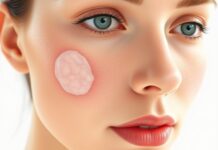
Rosacea can involve papules and pustules, persistent facial redness, flushing, visible blood vessels, and skin that burns or stings. Topical azelaic acid has its clearest role in papules and pustules associated with papulopustular rosacea. Studies and clinical reviews also report improvement in erythema, or redness, but that does not mean it will clear persistent flushing or visible vessels.
The US Food and Drug Administration (FDA) reviewed a 15% azelaic acid foam for adults with mild-to-moderate rosacea-related inflammatory papules and pustules. In a Phase 3 trial, effectiveness was assessed through 12 weeks. This supports use for inflammatory lesions; it does not establish that azelaic acid treats ocular rosacea, skin thickening, or every cause of facial redness. If eye symptoms are part of your rosacea, seek medical advice rather than relying on a facial cream or gel.
How To Use Azelaic Acid With Less Irritation
Follow the instructions supplied with your exact product or given by your prescriber. The amount and frequency can differ between formulations, so do not copy directions for a prescription gel onto a foam, cream, or cosmetic serum. Apply only as directed, and ask a pharmacist or clinician how it fits with other products if your routine includes retinoids, exfoliating acids, or other potentially irritating treatments.
Mild, temporary local irritation—such as stinging, itching, dryness, or redness—can happen. Rosacea-prone skin may already be sensitive, so avoid introducing several new products at once while you are working out how your skin responds. That makes it easier to identify what may be causing irritation, though it cannot prevent every reaction. If discomfort is strong, persistent, or worsening, contact your prescriber or pharmacist instead of simply increasing or continuing use.
There is no single frequency that fits every azelaic acid product. Check the label for how often to use it, and do not apply more often in an effort to speed results. If the instructions are unclear, ask a pharmacist or prescriber before changing the schedule.
When Results May Appear
Think in weeks, not days. The FDA-reviewed foam trial assessed outcomes through 12 weeks, and clinical reviews describe improvement with 15% to 20% formulations over treatment. That gives a useful timeframe for judging progress, but it does not promise that you will see a change by a particular week. The supplied trial detail does not establish exactly when each person first noticed improvement.
If you are tolerating the product but see little change, discuss the result with your clinician rather than raising the strength or frequency yourself. Rosacea is a chronic condition with different features, and a treatment aimed at bumps may not address flushing or visible blood vessels.
Strengths And Access Differ By Country
In the US, prescription azelaic acid products include 15% formulations; the FDA has reviewed both gel and foam products. A 2025 review describes approved 15% and 20% formulations in the US and European Union markets. What you can obtain, whether a prescription is needed, and the available vehicle can vary by country. This article cannot confirm current availability or rules for every market, including the UK and Australia, so check with a local pharmacist or regulator.
Cosmetic products may contain different strengths, but evidence for prescription rosacea products does not show that a lower-strength serum will work just as well. Nor does a higher percentage automatically make a product a better choice for sensitive skin: irritation and performance depend partly on the formulation. Compare the active ingredient, concentration, and directions—not just the product name—and ask a clinician whether azelaic acid fits your symptoms. If rosacea has not been diagnosed, get advice before treating persistent facial redness, which can have other causes.