


















Choline rich foods can help you work toward pregnancy intake targets, but the numbers differ by region and a prenatal vitamin may not contain much—or any—choline. Eggs, meat, fish, dairy, beans and some vegetables all contribute. Check your prenatal label, then consider your overall diet rather than assuming the supplement covers every nutrient.
How Much Choline Is Recommended During Pregnancy?
These figures are adequate intakes (AIs), not exact thresholds that determine whether an individual is getting enough:
- United States: 450 mg per day during pregnancy.
- European Union: The European Food Safety Authority (EFSA) sets an AI of 400 mg per day for adults and 480 mg per day during pregnancy.
- Australia and New Zealand: The joint nutrient reference values set an AI of 440 mg per day during pregnancy.
- United Kingdom: UK dietary reference values do not set a separate numerical choline target for pregnancy.
These are not directly interchangeable measures of need: the authorities use different reference frameworks, and an AI is not the same as a recommended dietary allowance (RDA). The figures offer a planning benchmark, not a diagnosis or a supplement dose. The UK’s lack of a numerical target also does not mean choline is unimportant; it means there is no UK pregnancy-specific number to compare with the other figures.
Choline Rich Foods To Add To Your Routine
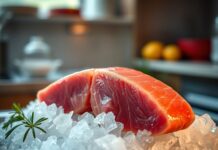
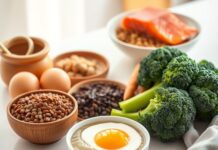
Egg yolks are among the more concentrated everyday sources: one large egg provides about 125 mg of choline, roughly 28% of the US pregnancy AI. Meat and poultry, fish, milk, yogurt and other dairy foods also contribute. Plant sources include soybeans, peanuts, beans, lentils, broccoli, Brussels sprouts and some whole grains. Amounts vary by food and serving, so a varied diet can add up across meals.
If you eat little or no meat or eggs, you can still get choline from plant foods, but it may take more attention to include sources regularly. Choline is not always listed on food labels, so its absence from a label does not necessarily mean a food contains none. In the US, listing it is generally voluntary unless a product makes a claim about choline.
Why Prenatal Vitamins May Have Little Or No Choline
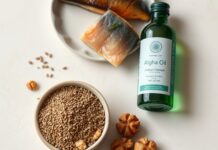
Prenatal formulas are not all alike, and taking one does not guarantee a particular amount of choline. US pregnancy guidance specifically notes that many prenatal supplements do not contain it. Check the Supplement Facts panel for “choline” and the amount per serving; don’t rely on the product name or assume that a standard prenatal formula covers your needs.
Your total comes from food and supplements together. If your prenatal has none, that alone does not establish that your intake is low; your usual foods matter too. If you are reviewing a separate choline product, compare its amount with what you already get rather than treating the pregnancy AI as a supplement dose.
What Choline Supplement Research Can—and Cannot—Show
Choline is an essential nutrient involved in cell membranes and the production of acetylcholine, a chemical messenger. Those roles help explain why it matters during pregnancy, but they do not prove that taking extra choline improves outcomes for every pregnant person.
In a 2023 review published in Cureus, Arpita Jaiswal, Deepika Dewani, Lucky Srivani Reddy and Archan Patel examined research on choline supplementation in pregnancy. They described potential benefits in clinical studies, while also noting methodological challenges and variation in findings. The review does not establish that supplements prevent birth defects or guarantee better cognitive outcomes, nor does it identify one dose that is right for everyone. It supports further research, not a promise of benefit.
If you have a restricted diet, are unsure how much choline you get, or are considering adding a supplement to your prenatal, ask your midwife, doctor or dietitian to review your diet and product labels with you. That can help you decide whether a change is appropriate without doubling up unnecessarily.