


















The benefits of gua sha on face are often described as less puffiness and a sharper jawline. The evidence supports a narrower conclusion: one small trial found changes in facial measurements after eight weeks of massage, but it did not test whether gua sha reduces facial fluid or creates lasting changes to your features. If you try it, keep the pressure gentle; bruising is not a sign that the technique is working.
Benefits Of Gua Sha On Face: What The Study Can Tell You
In a 2025 randomized trial, Sun-hee Ahn and colleagues studied 34 women aged 20–50 recruited in Seoul and Gyeonggi-do, South Korea. Participants were assigned to use either a gua sha tool or a facial roller for 10 minutes, five times a week, over eight weeks. The team measured facial surface distances, muscle tone and skin elasticity.
In the gua sha group, four facial measurements decreased by about 2.23–2.40 millimetres (roughly 0.09 inches). The researchers also recorded changes in muscle-tone measures. These results suggest that regular massage may change some measured features over the study period. They do not show that your face will look visibly slimmer, or that the effect will be the same for other people.
There are important limits. The trial included only 17 people in the gua sha group and compared gua sha with a roller, not with no massage. It therefore cannot establish how much of the change came from gua sha itself. The reported results also do not establish whether changes lasted after the eight-week program ended. The participants were women in one region of South Korea, so the findings do not establish results for every age, gender, skin type or location.
Puffiness And Sculpting Are Different Claims
The trial did not measure facial swelling, fluid movement or morning puffiness. It therefore cannot confirm that gua sha depuffs the face. Nor does a change in surface distance prove that the tool reshaped bone, removed fat or permanently altered skin. The researchers linked the gua sha results mainly to changes in muscle properties, but the study does not establish a lasting structural change.
Massage might make your face look different for a short time, but this trial cannot tell you whether that happens immediately or how long it might last. A lasting change to facial contours is a stronger claim than the measurements support. If your goal is a permanent change, gua sha is not proven to deliver one.
How To Try It With Less Risk
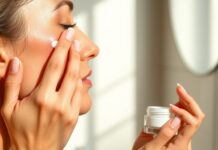
Gua sha involves gliding a smooth-edged tool over the skin. Use a clean tool and enough facial oil or another suitable lubricant for it to move without dragging. Hold it nearly flat against your skin and use light pressure. There is no need to scrape hard or press until your skin becomes painful.
Forceful scraping can irritate skin or cause bruising. Stop if you feel pain, notice broken skin, or develop significant redness or bruises. Avoid using the tool over irritated, inflamed or broken skin. If you bruise easily, take medication that affects bleeding, or have a skin condition, check with a clinician before trying facial scraping. Seek medical advice for bruising that is severe, keeps recurring or does not improve.
Think of gua sha as an optional massage practice, not a proven way to permanently sculpt your face. The trial offers an early, limited signal about measured contour changes with frequent use; it does not settle whether those changes are noticeable, lasting or related to less puffiness. Gentle technique may reduce the chance of skin injury, but it cannot guarantee that you will see a cosmetic benefit.