






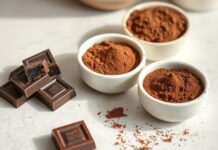














If you’re looking up “dark chocolate blood pressure,” the short answer is that cocoa flavanols may lower blood pressure by a small amount on average. But trials often used products with measured flavanol doses, while ordinary cocoa powder and chocolate can vary widely. A dark wrapper or a high cocoa percentage does not tell you how much flavanol you’re getting.
What dark chocolate blood pressure trials can tell you
A 2026 systematic review and meta-analysis by Misato Sakuda, Kyoko Ito and colleagues pooled 25 randomized trials involving 1,167 adults with and without hypertension. The interventions supplied 10.6 to 1,680 milligrams of cocoa flavanols a day. On average, systolic pressure fell by about 2.7 mmHg and diastolic pressure by about 1.8 mmHg. The researchers rated the evidence as moderate for systolic pressure; certainty for other outcomes was more limited. They found no clear flavanol dose threshold that reliably predicted a blood-pressure effect.
That result is consistent with a 2017 Cochrane review of 35 trials and 1,804 mainly healthy adults: flavanol-rich cocoa products lowered blood pressure by about 2 mmHg over roughly nine weeks. A subgroup analysis suggested a larger systolic reduction among people with hypertension, but the authors cautioned that this finding needed confirmation. The trials were short, and they did not establish that cocoa prevents heart attacks or strokes, or replaces treatment.
Results have not been identical across reviews. A 2022 meta-analysis of 31 articles found a larger average systolic reduction for dark chocolate than for cocoa beverages, but the beverage estimate was uncertain. Differences in participants, products, doses and study design make it hard to predict what a particular bar or mug of cocoa will do. Taken together, the findings support a possible modest effect from flavanol-rich products—not a dependable way to treat high blood pressure.
Why cocoa powder and chocolate don’t have a standard dose
Cocoa beans naturally contain flavanols, but processing can reduce them. In particular, alkalization—also called Dutch processing—can lower flavanol content. Natural, non-alkalized cocoa powder generally retains more, but neither “natural” nor “dark” guarantees a specific amount. Chocolate products also differ in cocoa solids, recipe and processing. Cocoa percentage alone is not a flavanol measurement.
That matters when comparing everyday foods with trial products. In a 2016 analysis of 32 cocoa products, the researchers estimated that about 100 to 500 grams (3.5 to 17.6 ounces) of chocolate could be needed to provide 900 mg of flavanols, depending on the product. That wide range illustrates how variable chocolate can be; it is not a serving recommendation. The 2026 review, meanwhile, did not identify a clear blood-pressure dose threshold. Most ordinary product labels do not state flavanol content, so you usually cannot calculate whether a serving matches a trial dose.
Unsweetened cocoa powder may be a more concentrated way to use cocoa than a sweetened chocolate bar, but its flavanol level still depends on the product and processing. Unless a manufacturer provides a measured amount, you cannot assume that a teaspoon, cup or square supplies the dose studied in a trial.
What the EU cocoa-flavanol claim actually means
In the European Union, an authorized claim says that cocoa flavanols “help maintain the elasticity of blood vessels, which contributes to normal blood flow.” To use it, a qualifying cocoa beverage or dark chocolate product must provide at least 200 mg of cocoa flavanols a day. The claim is about maintaining normal blood flow—not lowering blood pressure, treating hypertension or reducing cardiovascular events. It also does not apply automatically to every cocoa powder or dark chocolate bar.
Outside the EU, including in the United States, the same EU authorization does not automatically set the rules for product labels. Wherever you shop, look for a stated flavanol amount and serving guidance if you want to compare a product with that claim or with trial doses. If the label gives only a cocoa percentage, it does not tell you the flavanol dose.
How to use the findings if you have high blood pressure
You can enjoy cocoa or dark chocolate as a food, but the trial results do not justify using it instead of prescribed medicine or established blood-pressure care. For broader steps and treatment considerations, see this guide to managing high blood pressure. If you have high readings or are considering a flavanol supplement, discuss your situation with a clinician; supplements and everyday foods are not interchangeable with proven treatment.