



















If you’re wondering what foods cause heartburn, the short answer is that there is no reliable list that applies to everyone. Spicy dishes, citrus, tomatoes, chocolate and fatty meals may bother some people, but current guidance does not mean you need to avoid them all. It makes more sense to look for a repeatable pattern in your own symptoms.
The question: what foods cause heartburn?
Heartburn is a symptom; GERD is a condition involving troublesome reflux symptoms or complications. A food that makes your chest or throat burn does not necessarily increase the number of reflux episodes or the amount of acid reaching your esophagus. Symptoms and measurements such as esophageal acid exposure are related, but they are not interchangeable.
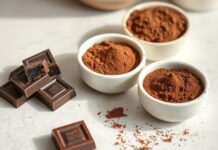
That distinction helps explain why “trigger foods” are hard to rank. Citrus or tomatoes may feel irritating to someone who is already sensitive, while another person can eat them without symptoms. Spicy food may intensify a burning sensation for some people, but that feeling alone does not show that reflux itself has increased. Chocolate is often listed as a trigger, yet the evidence does not support a blanket ban for everyone with GERD.
Fatty meals are also commonly blamed. Some people notice symptoms after them, but that does not prove that every high-fat food reliably worsens reflux for every person. A large or late meal may also be part of the pattern, making it difficult to pin symptoms on one ingredient.
What studies say about foods and measured reflux
In a 2024 systematic review and meta-analysis, Narisorn Lakananurak and colleagues assessed 21 intervention studies in adults diagnosed with GERD. The studies tested 16 different dietary approaches, rather than providing a clear trial of every food on a typical trigger list. The researchers could pool results for low-carbohydrate diets and eating speed; the low-carbohydrate diets reduced measured esophageal acid exposure, while eating more slowly did not reduce the percentage of reflux events. Most other approaches were represented by only a small number of studies. The review concluded that dietary-intervention evidence remains limited. It does not establish that avoiding spicy food, citrus, tomatoes or chocolate reliably reduces measured reflux.
Symptoms were the focus of a separate 2022 systematic review by Zoe Martin and colleagues. It included 21 studies in adults with a history of GERD or functional dyspepsia—a condition that is not the same as GERD. The interventions varied widely, so the review could not support a universal food-avoidance plan. Improvements reported for a particular intervention do not show that commonly blamed foods are triggers for everyone.
A 2014 cross-sectional study by Ai Kubo and colleagues looked at 317 people with GERD and 182 controls in the Kaiser Permanente Northern California population. People with GERD reported eating tomato products about as often as controls, and they were more likely to report fried foods and a high-fat diet. This kind of study measures patterns at one point in time; it cannot show that those foods caused symptoms or that avoiding them would help. It does, however, illustrate why a simple trigger list can be misleading.
Test your own pattern without a long-term ban
Clinical guidance takes a more individualized approach: notice which foods reliably trigger your symptoms and consider avoiding those, rather than automatically eliminating every item on a list. Recommendations to avoid personal triggers are common, but research has not established that broad restriction works for everyone.
For a short period, keep a simple diary of what and roughly how much you ate, when symptoms began, and whether you lay down soon after eating. If one food seems suspicious, change one thing at a time: leave it out briefly, then try it again and see whether the same symptom pattern returns. A repeated pattern is more useful than a single uncomfortable meal. Avoid cutting out several food groups indefinitely; if restrictions are affecting your nutrition or making meals difficult, ask a clinician or dietitian for help.
Guidance also commonly advises leaving a few hours between eating and lying down. If evening symptoms are an issue, meal timing may be worth tracking alongside food choices. Don’t stop prescribed GERD treatment just to test a diet. If you are considering changing long-term omeprazole or another proton pump inhibitor, read about discussing a safe plan to reduce or stop omeprazole and speak with your clinician.
If symptoms persist despite changes, or you have trouble swallowing, seek medical advice rather than relying on food restrictions alone. Chest pain needs prompt medical assessment.