

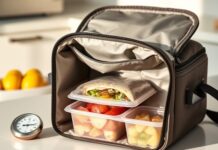


















The temperature danger zone is the range where bacteria can multiply quickly. For packed lunches, the safest approach is to keep perishable food properly cold—not to assume an insulated bag buys you a set number of hours. Under U.S. Department of Agriculture (USDA) consumer guidance, discard perishables left at room temperature for more than two hours, or one hour when the air is hotter than 90°F (32°C). Those limits are not a timer for a lunch kept cold with ice packs.
What The temperature danger zone Means
USDA guidance defines the danger zone as 40–140°F (about 4–60°C). Cold food should be held at or below 40°F (about 4°C). The clock-based discard limits apply when perishable food is out of refrigeration; hot weather shortens the limit to one hour above 90°F. Meat, poultry, eggs, dairy, deli foods, cooked dishes and cut fruit are among the lunch items that need chilling. Some packaged lunch combinations still need refrigeration even if they contain cured foods or preservatives, so check the label.
You cannot reliably judge safety by smell, taste or appearance. Harmful bacteria may be present without changing how food looks or smells, so don’t taste a questionable lunch to decide whether to keep it.
How To Use An Insulated Bag And Frozen Ice Packs
An insulated lunch bag slows warming, but it does not make food cold by itself or guarantee a particular safe holding time. USDA recommends packing at least two cold sources with perishable food. Use two frozen gel packs, or a gel pack with a frozen drink, and place them above and below the food. Freeze the packs overnight.
Chill cooked ingredients thoroughly in the refrigerator before packing. Prepare food the night before if helpful, but pack the bag just before leaving. Keep it closed and out of direct sun or a hot car. If a refrigerator is available at school or work, put the perishable food in it on arrival. A food thermometer can help you check whether the food has stayed at or below 40°F (4°C); a cool-feeling bag is not a precise temperature check.
Wash your hands and clean food-preparation surfaces before packing. Keep raw meat and its juices separate from ready-to-eat foods; these tips for cleaning reusable bags and separating groceries can help with that routine.
When To Discard A Perishable Lunch
If perishable food has been at room temperature beyond the USDA limit—two hours, or one hour above 90°F (32°C)—discard it. If you do not know how long it was warm, or cannot tell whether the cold packs kept it properly chilled, choosing not to eat it is the safer option. Putting food back in the refrigerator later does not undo time spent warm. At lunchtime, discard perishable leftovers that have sat out beyond the limit rather than saving them for later.
Whole fruit and vegetables, bread, crackers, peanut butter, jam and some hard cheeses are examples of foods that generally do not need a cold source, though product labels matter. Canned foods also vary: some are shelf-stable until opened, while others say “Keep Refrigerated.”
Why Rules Can Differ By Country
The figures above are USDA consumer guidance for the United States, not a universal rule for every packed lunch. Food-safety authorities in the UK, EU countries and Australia may set or explain cold-holding and time limits differently. Rules can also depend on whether guidance is for household food or commercial food handling. That is why numbers from one country should not automatically be applied in another.
A reliable side-by-side comparison needs current guidance from each relevant national or local authority; there is no single EU-wide consumer lunch rule established here. If you live in the UK, an EU country or Australia, check your local food-safety authority for its current temperature and time guidance. Wherever you are, follow the label, keep chilled food cold during transport and discard food when its time-temperature history is uncertain. If someone becomes ill after eating food they suspect was unsafe, contact a healthcare professional for advice.